Hey there! I’m a supplier of stainless steel centrifugal castings. Over the years, I’ve had my fair share of dealing with these nifty products, and I often get asked about the quality standards for stainless steel centrifugal castings. So, I thought I’d sit down and write this blog to share what I know. Stainless Steel Centrifugal Castings
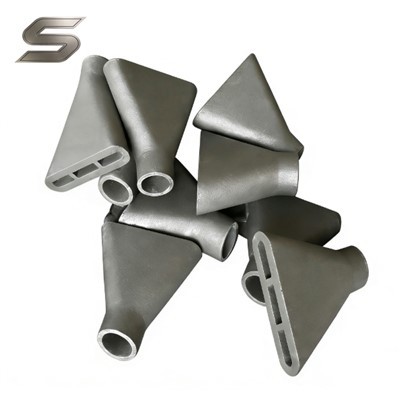
First off, let’s talk about what stainless steel centrifugal castings are. They’re made by pouring molten stainless steel into a rotating mold. This spinning action forces the metal against the walls of the mold, creating a part with a really dense and uniform structure. These castings are super popular in industries like automotive, aerospace, and oil and gas because they’re strong, corrosion – resistant, and can be made into all sorts of complex shapes.
Now, onto the quality standards. The first thing we look at is the chemical composition. Stainless steel is an alloy, which means it’s made up of different elements like chromium, nickel, and carbon. Each element plays a crucial role in the properties of the final casting.
Chromium is the key ingredient that gives stainless steel its corrosion – resistance. Generally, a good stainless steel centrifugal casting should have a chromium content of at least 10.5%. This creates a thin, protective oxide layer on the surface of the casting, preventing rust and other forms of corrosion. Nickel, on the other hand, helps to improve the ductility and toughness of the stainless steel. It also enhances the corrosion resistance in some environments, especially those with high chloride levels. The amount of nickel can vary depending on the specific grade of stainless steel, but it’s often in the range of a few percent to over 20%.
Carbon is another important element. A higher carbon content can increase the hardness and strength of the stainless steel, but it can also make it more prone to corrosion and cracking. So, the carbon content needs to be carefully controlled. For most corrosion – resistant stainless steel castings, the carbon content is kept relatively low, usually less than 0.1%.
In addition to these main elements, there are also other trace elements like manganese, silicon, phosphorus, and sulfur. Manganese helps with the deoxidation process during casting and can improve the strength and workability of the steel. Silicon is used as a deoxidizer and can also enhance the oxidation resistance. Phosphorus and sulfur are usually considered impurities, and their levels need to be kept as low as possible to prevent brittleness and other quality issues.
Next up is the mechanical properties of the stainless steel centrifugal castings. We need to make sure they have the right strength, hardness, and toughness for the intended application. Tensile strength is a measure of how much stress the casting can withstand before it breaks. The yield strength is the point at which the casting starts to deform permanently. For most stainless steel centrifugal castings, the tensile strength should be in the range of 400 – 700 MPa, depending on the grade and heat treatment.
Hardness is another important property. It’s a measure of how resistant the casting is to indentation and wear. We can use different methods to measure hardness, such as the Brinell, Rockwell, or Vickers hardness tests. The hardness of a stainless steel casting can be adjusted through heat treatment. For example, annealing can make the casting softer and more ductile, while quenching and tempering can increase its hardness and strength.
Toughness is the ability of the casting to absorb energy and deform plastically before fracturing. A tough casting is less likely to crack or break under impact or sudden loads. We can improve the toughness of the stainless steel by controlling the grain size and the distribution of the alloying elements.
The surface finish of the stainless steel centrifugal castings is also a big deal. A smooth surface finish not only looks better but also has practical benefits. It can reduce friction, which is important in applications where the casting is in contact with other parts. A rough surface can also trap dirt and moisture, which can lead to corrosion.
We use different methods to achieve a good surface finish. One common method is machining, where we use cutting tools to remove any rough spots or excess material from the surface of the casting. Another method is polishing, which can give the casting a shiny and smooth appearance. The surface roughness is usually measured in micrometers, and for most applications, a surface roughness of less than 10 micrometers is desirable.
Dimensional accuracy is yet another crucial quality standard. The casting needs to be made to the exact specifications provided by the customer. Even a small deviation in dimensions can cause problems when the casting is assembled with other parts. We use precision measuring tools like calipers, micrometers, and coordinate measuring machines (CMMs) to ensure that the castings meet the required dimensions.
When it comes to internal quality, we look for any defects like porosity, cracks, or inclusions. Porosity is the presence of small holes or voids in the casting. It can be caused by factors like improper pouring, gas entrapment, or shrinkage during solidification. Cracks can occur due to thermal stress, mechanical stress, or impurities in the metal. Inclusions are foreign particles that get trapped in the casting during the casting process.
To detect these internal defects, we use non – destructive testing methods like ultrasonic testing, radiographic testing (X – ray or gamma – ray), and magnetic particle testing. Ultrasonic testing uses high – frequency sound waves to detect internal flaws. Radiographic testing can create an image of the internal structure of the casting, allowing us to see any hidden defects. Magnetic particle testing is used to detect surface and near – surface defects in ferromagnetic materials.
Now, I know that all these quality standards might seem a bit overwhelming, but they’re all essential to ensure that the stainless steel centrifugal castings we supply are of the highest quality. At our company, we have a strict quality control system in place. We test every batch of castings to make sure they meet the required chemical composition, mechanical properties, surface finish, dimensional accuracy, and internal quality.
If you’re in the market for stainless steel centrifugal castings, I’d love to have a chat with you. Whether you need a small batch for a prototype or a large production run, we can help. Our team of experts is always ready to discuss your requirements, offer advice on the best grade of stainless steel for your application, and ensure that you get the best – quality castings at a competitive price. So, don’t hesitate to reach out for a quote and start a discussion about your procurement needs.
Steel Ring Rollings References:
- "Stainless Steel: Properties, Processing, and Applications" by ASM International
- "Centrifugal Casting Technology" by various industry publications
- "Quality Control in Metal Casting" by industry – specific research papers
Hebei Shata Machinery Co., Ltd.
As one of the most experienced stainless steel centrifugal castings manufacturers and suppliers in China, we have advanced foundry technique and professional production team. Welcome to buy high-grade stainless steel centrifugal castings for sale here from our factory. All custom made products are with high quality and competitive price.
Address: No.11 Cangshun Rd., Shijiazhuang, Hebei, China
E-mail: Info@shatamachinery.com
WebSite: https://www.shatamachinery.com/
