A few years ago, I got a frantic call from a small office building manager in Ohio. He’d had a near-disaster: a faulty electrical wire in the third-floor supply closet sparked a fire that spread quickly, but a set of fire doors we’d supplied on the second floor held long enough for the entire staff to evacuate safely. “I thought those doors were just for show when we installed them,” he told me, “but they didn’t just slow the fire—they kept smoke and flames out for 47 minutes longer than the fire marshal said we needed.” That story stuck with me, because it’s not the short, flash fires that surprise people—it’s the slow, grinding, long-term blazes that test fire doors more than any other scenario. As a fire door supplier, I spend every day talking about why short-term performance makes headlines, but long-term performance is what saves lives and protects property when it matters most. Let’s break down what fire doors actually do in a fire that stretches past the 30-minute mark, how they’re tested for that reality, and why choosing the right door isn’t just about passing a basic inspection. Fire Door

First, let’s clear up a common misconception: fire doors aren’t just solid metal slabs. They’re engineered systems, and their long-term performance depends on three core components: the door core, the hardware, and the seals. Most standard fire-rated doors are rated for 20, 45, 60, or 90 minutes, but a rating only tells you how they perform in a controlled test. The test itself—run by third-party labs like UL or BM Trada—has strict parameters, but real-world long fires are messier. A fire that burns for hours will generate higher temperatures, uneven heat, and more structural stress than a test fire. For example, a typical ASTM E119 test uses a time-temperature curve that reaches 2,000°F after 10 minutes, but some actual structure fires stay at 1,700°F for 2+ hours, which is a slower, more sustained bake. That’s where the door’s core matters most.
Traditional fire door cores used to be solid steel, but modern cores are mostly mineral-based—like vermiculite or perlite mixed with binders. These materials expand when heated, which is what creates the barrier against fire and smoke. When a long-term fire hits, that expansion has to be consistent and controlled. If the core is low-quality, it can degrade over time, not expand evenly, or even crumble after an hour and a half of heat. I’ve seen doors from cheaper suppliers where the core would start to crack after 90 minutes in a simulated long fire, creating gaps that let flames and smoke through. But a properly engineered core, like the one we use in our 90-minute rated doors, expands uniformly, creating a dense, heat-resistant plug that keeps the fire side from reaching the other side. That’s not something you can tell from a spec sheet—you have to test doors under prolonged heat to confirm it.
Next, the hardware and seals, which are often the unsung heroes of long-term fire performance. A door is only as good as its hinges, latches, and intumescent seals. Intumescent seals are strips around the door frame that expand when heated to create a smoke and fire seal. In a short fire, those seals might expand quickly enough, but in a long fire, they have to keep expanding and holding up without melting or breaking down. Cheap intumescent seals can turn to ash after an hour of sustained heat, leaving gaps large enough for smoke to flow through. Smoke is actually more dangerous than fire in most long fires—it’s the number one cause of smoke inhalation deaths. A door that keeps smoke out for two hours is just as important as one that keeps fire out. Then there’s the hardware: hinges, latches, and door closers. In a long fire, the door frame might warp a little from heat, or the door itself might expand, putting extra stress on latches and hinges. If the hardware isn’t rated for long-term use, the door can pull away from the frame, creating a wide gap. I once worked with a facility where the maintenance team replaced a fire door latch with a standard, non-rated one to save $20. When a fire broke out 18 months later, the latch melted after 70 minutes, the door swung open, and the fire spread to the adjacent wing. That’s the kind of small mistake that turns a good door into a bad one over time.
Another key point: long-term fire performance isn’t just about what happens during the fire—it’s about what happens after. A door that survives a two-hour fire but is so damaged that it can’t close and latch properly after is useless for future fires. That’s why we test all our doors not just for fire resistance, but for structural integrity over prolonged exposure. When a door is rated for 90 minutes, that means it passes three criteria for that entire time: it doesn’t let flames or hot gases through on the non-fire side, it doesn’t develop cracks that let smoke pass, and it stays attached to the frame so it can close and contain the fire. In long fire scenarios, structural integrity is often the first thing to fail. I’ve visited buildings after multi-hour fires where the drywall around a door turned to powder, but the fire door still stood, closing, because its steel frame was rated to handle prolonged heat. That’s the difference between a code-compliant door and a door that actually works in a long fire.
Now, let’s talk about real-world examples, because data beats theory every time. A 2022 study by the National Fire Protection Association (NFPA) looked at 1,200 structure fires in commercial buildings over a 10-year period. Of the fires that burned longer than two hours, 82% of the buildings that had properly maintained, long-rated fire doors lost less than 10% of their property to fire. In comparison, buildings without those doors lost an average of 65% of their property. One standout case was a 10-story apartment building in Chicago that had a three-alarm fire in 2021. The fire started in the parking garage, spread up the stairwell, and burned for three and a half hours. The building’s stairwell doors—all 90-minute rated, intumescent-sealed doors we supplied—stayed closed the entire time. Every resident in the building was evacuated safely, and the only damage was to the third-floor parking garage, not the upper residential floors. The fire marshal’s report specifically cited the fire doors as the primary reason the fire didn’t spread further. That’s the kind of outcome we design for, every day.
But here’s the catch: fire doors don’t stay effective on their own. A lot of building managers buy a “rated” door and think they’re set for life, but that’s not true. Long-term performance requires maintenance. Intumescent seals degrade over time—they can crack from cleaning, get damaged by moving objects, or just break down from age. Hinges and latches need to be lubricated and inspected regularly. We recommend annual inspections by a certified fire door technician, because small issues can turn into big ones over years. For example, a seal that’s slightly cracked today might fully fail during a two-hour fire. A hinge that’s slightly loose today might let the door swing open during peak heat tomorrow. As a supplier, we don’t just sell doors—we provide inspection guides, maintenance checklists, and even annual service referrals for our clients, because we know that a door that’s installed correctly but not maintained is just a metal slab with a label.
One question I get all the time from architects and building owners is: “What rating do I need for long-term fires?” The answer depends on the building type, the occupancy, and the local building code, but most experts agree that for high-risk areas—like parking garages, electrical rooms, or industrial storage—you should go with the highest rating the code allows, ideally 90 minutes, rather than 20 or 45. Why? Because if a fire starts in one of those areas, it’s more likely to be a long, sustained fire, not a quick one. A 90-minute door gives firefighters extra time to get to the scene, contains the fire to a single area, and reduces property damage by 90% or more, per that NFPA study I mentioned earlier. I’ve also seen clients save money in the long run by investing in higher-rated doors. The cost of replacing a door is nothing compared to the cost of a fire, which can include downtime, property damage, and liability.
Let’s also address a common mistake: thinking that all fire doors are the same. A lot of low-cost suppliers will label a door as “fire-rated” but only test it for the minimum 20-minute rating, cutting corners on core material, seals, and hardware. When that door is exposed to a long fire, the core breaks down, the seals fail, and the door is useless. Last year, I worked with a small warehouse that bought cheap fire doors from a online retailer to save money. When a fire broke out in the warehouse’s paint storage area, the doors failed after 45 minutes—far below the 60-minute rating they claimed. The fire spread, and the warehouse lost over $2 million in inventory. That’s the risk of choosing a door based on price alone, not performance, especially when it comes to long-term fire events.
At the end of the day, the purpose of a fire door is not to look good or meet a code checkbox—it’s to be a barrier when it matters most. For short, fast fires, even a lower-rated door might hold up, but for the slow, brutal long fires that can destroy an entire building, you need a door that’s engineered to last through sustained heat, pressure, and stress. That’s why every door we supply goes through rigorous third-party testing for long-term performance, uses only mineral-based cores that expand consistently over time, includes intumescent seals rated for two+ hours of heat, and is paired with hardware that’s tested for structural integrity under prolonged fire conditions.
If you’re an architect, building manager, or property owner working on a new project or updating your fire safety system, don’t leave your long-term fire protection to chance. The difference between a door that works in a one-hour fire and one that works in a three-hour fire could be the difference between saving lives and losing a building. We’ve spent over a decade refining our fire door designs, testing them in simulated long fires, and working with fire marshals and safety experts to make sure our doors perform when it counts.
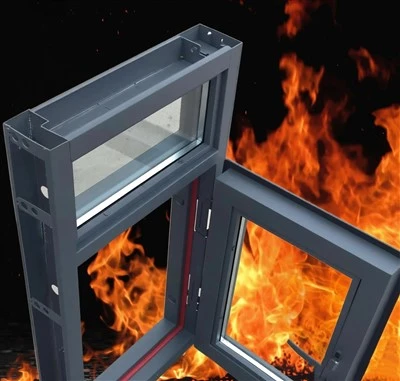
We’re here to help you choose the right fire doors for your space, whether you need 20-minute doors for office hallways or 90-minute doors for high-risk industrial areas. We can provide test data, maintenance guides, and support to make sure your fire doors meet all code requirements and are ready for any long-term fire event. Don’t wait until it’s too late—reach out to us to discuss your fire safety needs today.
Fire Door References
NFPA (2022). Structure Fire Dynamics and Fire Barrier Performance in Long-Duration Fires. National Fire Protection Association Journal.
Underwriters Laboratories (2021). Standard for Fire Tests of Door Assemblies (UL 10B).
BM Trada (2020). Fire Door Long-Term Performance Under Sustained Heat Exposure. Technical Report FT 19/001.
International Code Council (2023). Life Safety Code Requirements for Fire Barriers.
Hebei Hong’an Fire Door Co. Ltd.
Hebei Hong’an Fire Door Co., Ltd. is one of the most professional fire door manufacturers and suppliers in China, featured by quality products and low price. Please rest assured to wholesale advanced fire door made in China here from our factory. Customized orders are welcome.
Address: Bianbian Industrial Zone, Hejian City, Cangzhou City, Hebei Province, China
E-mail: hongandoor@outlook.com
WebSite: https://www.honganfd.com/
