Hey there, fire safety squad, fellow facility managers, and anyone stuck fielding the “did we test that hose last quarter?” panic call! I’m Jake, been selling nitrile fire hoses out of our shop for about 8 years now, and let me tell you—nothing grinds my gears more than a customer calling at 2 a.m. panicking because a hose failed a pressure test or started leaking mid drill. Most of the time? It’s not because the hose was garbage when it left our warehouse. It’s because they skipped basic maintenance that’s actually pretty easy to nail down. Today, I’m breaking down how to keep your nitrile fire hoses in tip-top shape, no fancy certifications or expensive tools required—just the stuff you probably already have lying around your gear closet. Nitrile Fire Hose
First off, quick reality check: I sell a ton of different fire hoses, but nitrile is hands down the most popular for a reason. It’s flexible in cold weather (no cracking when you yank it out of a -10°F truck bay in January), way more resistant to oil and chemicals than the old rubber hoses we used to use, and holds pressure like a champ. But here’s the thing—nitrile isn’t indestructible. It’s synthetic, so it reacts to the same stuff that messes with every other hose: UV light, dirt, harsh chemicals, and being crammed into a tight rack all twisted up. I’ve seen guys toss a hose in the back of a truck for months after a training, and it comes out cracked so bad you could stick your finger through it. That’s avoidable, trust me.
Let’s start with the obvious: cleaning. Wait, cleaning a fire hose? Yeah, most people forget this step. When you’re fighting a fire or doing a training drill, that hose is picking up all kinds of garbage—ash, soot, mud, chemical runoff (especially if you’re dealing with industrial fires), even tiny bits of debris from pavement. If you leave that gunk on the nitrile jacket, it eats away at the material over time. Here’s how I do it with our customers: right after you’re done with a drill or a call, unload the hose from the rack. Don’t just spray it off with a hose—use a soft bristle brush, lukewarm water, and a mild, pH-neutral soap (no bleach, no degreasers, that stuff will break down the nitrile rubber). Scrub gently, especially the couplings and the exterior jacket. Pay extra attention to the areas where the hose is folded or twisted—those crevices trap dirt like crazy. Once you’re done scrubbing, rinse it thoroughly until the water runs clear, no suds or mud left. If it’s got really tough stains from oil or chemicals (like if you had a flammable liquid fire), use a specialized industrial hose cleaner, but again, stay away from anything with strong solvents—they’re the enemy of nitrile.
Next, drying. This is where most people mess up bad. I get it—after a long drill, you’re tired, you just want to load up the truck and go home. But if you stuff a damp hose into a tight rack, you’re asking for mold, mildew, and even rot in the fabric lining, which will eat through the nitrile from the inside out. Here’s the rule: dry every part of the hose completely before storing it. No exceptions. How to do it? Hang it loosely on a dedicated hose rack—don’t fold it into neat little squares or coil it tight. Coiling tight for long storage puts stress on the hose, especially at the couplings, and can cause cracking over time. If you don’t have a dedicated rack, you can drape it over something sturdy (like a fence post or a ladder) as long as it’s not touching the ground. For really damp or muddy hoses, I recommend letting them air dry for at least 24 hours, even 48 if they’re extra wet. Pro tip: if you’re in a hurry, use a low-pressure air compressor (max 150 PSI—higher pressure can damage the hose lining) to blow out trapped water from the interior. Just make sure you don’t hold the compressor nozzle too close to the nitrile, that can cause tiny tears.
Now, storage. This is where I see the most mistakes. Let’s talk storage basics first: keep your hoses in a cool, dry place. Avoid areas that get direct sunlight—UV rays are the #1 cause of nitrile hose degradation. I’ve had customers bring in hoses that were stored on a sun-drenched loading dock for a year, and the exterior jacket was so brittle it flaked off when you touched it. Also, keep them away from any harsh chemicals, oils, or fuels. If you store hoses next to a pump that leaks diesel or a cabinet of cleaning solvents, those fumes will break down the nitrile rubber over time. Another big one: don’t store hoses near sharp objects. I’ve seen guys stack tools or metal parts on top of hoses in a storage bin, and those sharp edges can puncture the jacket.
How to coil and store them properly, by the way? When you’re done drying, coil the hose loosely—about a 2-foot diameter coil. Tight coils put too much tension on the hose, especially at the ends near the couplings, leading to cracks. And don’t use those cheap plastic hose straps to hold the coil together—they can cut into the nitrile over time, especially if the hose is cold. Use a heavy-duty fabric strap, and don’t pull it too tight. Store coiled hoses on their side, not standing upright on the coupling end—standing upright puts all the weight of the coil on the metal coupling, which can tear away from the hose. If you have multiple hoses, don’t stack them too high—max 3 or 4, so the bottom ones don’t get crushed.
Inspections. This is non-negotiable. You should inspect your nitrile fire hoses at least once a month, before every drill, and after every call. What are you looking for? Let’s break it down. First, the exterior jacket: check for cracks, cuts, abrasions, or brittleness. Run your hand along the entire length of the hose—if you feel any rough spots or small tears, mark that hose for replacement or further testing. Next, the couplings: make sure they’re tight, no rust or corrosion, and the gaskets aren’t cracked or worn out. A bad gasket is a quick way to have a leak mid-use. Then, the interior—wait, how do you check the interior without taking the hose apart? For small sections, you can use a flashlight and a small mirror to peer inside, or when you’re rinsing it, feel for any soft spots or areas that feel different. Also, check for any discoloration—dark spots could be mold, which means the hose wasn’t dried properly.
Pressure testing. This is the big one that most places only do once a year, but I’d recommend doing it every 6 months, especially if your hoses get heavy use. Nitrile hoses have a rated working pressure, usually around 150 PSI for standard 1.5-inch or 2.5-inch hoses. You never want to go above the rated pressure, but testing to the test pressure (usually around 250 PSI, check your hose’s specs) is critical to find hidden weaknesses. Here’s how to do it safely: make sure the hose is completely dry and free of kinks. Attach it to a test pump and a pressure gauge. Slowly build up pressure to the test pressure, hold it for at least 5 minutes, and check for leaks, drops in pressure, or bulges in the hose. If you see any of those, the hose is compromised and needs to be replaced. Never test a hose that looks visibly damaged—you don’t want it to burst.
Wait, a common question I get: can I repair a damaged nitrile fire hose? Short answer: small, surface cuts (less than 1 inch) that don’t go all the way through the jacket can sometimes be repaired with a specialized hose repair kit, but I always tell customers to be careful. If the cut is deeper, or if the hose has bulges, leaks when pressurized, or cracks, replace it. Fire hoses are your first line of defense—don’t risk a repair job that might fail when you need it most.
Another thing: age. Even if you take perfect care of your nitrile fire hoses, they won’t last forever. The average lifespan is 10-15 years, but that depends on use, storage, and maintenance. I’ve had customers send me hoses that are 18 years old and still going strong, and others that have to replace hoses every 5 years because they stored them wrong. Keep track of when you get each hose, and retire them before they hit 15 years, even if they pass all tests. It’s not worth the risk.
Now, let’s talk about the stuff that surprises most people: common mistakes I see every day. First, using harsh chemicals to clean hoses. I had a customer once use a degreaser to clean a hose after a chemical fire, and the entire nitrile jacket turned gooey. Degreasers dissolve the rubber in nitrile, so even if you think it’s heavy duty, stick to mild soap. Second, leaving hoses coiled tight for months on end. Tension builds up in the hose, and over time, it develops “kink memory” where it stays twisted even after you uncoil it, which can lead to leaks at the coupling. Third, storing hoses in direct sunlight. UV light breaks down the rubber molecules, so after a year of being stored outside, even a well-maintained hose will be brittle. Fourth, skipping drying. I can’t tell you how many moldy hoses I’ve seen that were stuffed in a truck after a drill. Mold eats away at the lining from the inside, so by the time you notice it, the hose is already weak.
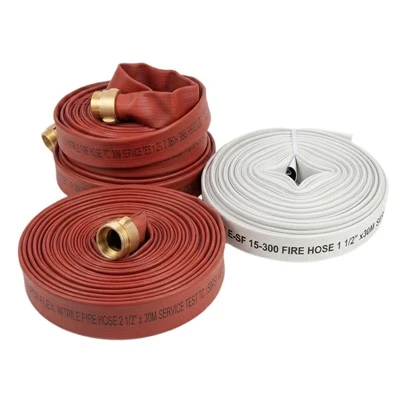
If you’re new to working with nitrile fire hoses, or if you’re just looking to streamline your maintenance process, we can help. We sell high-quality nitrile hoses that are built to handle the rigors of daily use, and we also offer a full line of maintenance supplies—from pH-neutral soap to specialized repair kits to hose racks. Whether you need to replace old hoses, set up a maintenance schedule for your team, or just have questions about what kind of hose is best for your facility, we’re here to help. Don’t wait until your next drill or call to find out your hose is compromised. Reach out to our team to chat about your needs, and we’ll make sure you’ve got the right gear and the right tips to keep your team safe.
Dry Powder Fire Extinguishers References
National Fire Protection Association (NFPA). Standard for Fire Hose, 2022 Edition.
Fire Protection Equipment Manufacturers Association (FPEMA). Maintenance Guidelines for Synthetic Fire Hoses, 2021.
OSHA. Best Practices for Fire Equipment Maintenance, 2023.
Shaoxing Weimin Fire Fighting Equipment Co., Ltd.
Shaoxing Weimin Fire Fighting Equipment Co., Ltd. is one of the most professional nitrile fire hose manufacturers and suppliers in China, also supports customized service with low price. Welcome to buy discount nitrile fire hose in stock here and get quotation from our factory. 5 years warranty is available.
Address: CHINA
E-mail: info@weiminfire.com
WebSite: https://www.weiminfire.com/
