Hey there, if you’re reading this, you’re probably either tired of your hologram showcase feeling like a sad, grainy party trick that makes people shrug instead of stare, or you just got a quote from a random hologram company and are wondering how to actually make that tech work for your brand. Let me cut the crap: I’ve been in the hologram showcase game for years— I’m the supplier you’d call when you don’t want to deal with a sales rep who hasn’t touched a real hologram since a trade show booth demo that crashed mid-pitch. I’ve seen every mistake businesses make, and today we’re talking about how to actually level up your showcase performance, no fancy jargon required. Hologram Showcase
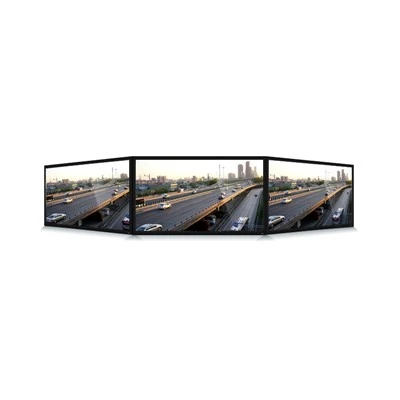
First off, let’s get one thing straight: a hologram showcase isn’t just slapping a “3D video” on a projector and calling it a day. Most of the bad ones I see (the ones that make people go, “Wait, is that a glitchy iPhone video?”) skip the basic science that makes holograms look real. Let’s start with the most obvious yet most messed up part: the display hardware. I know, I know— you want the cheapest screen you can find to save a buck. But here’s the tea: cheap LED screens wash out in any kind of ambient light, and for a hologram, ambient light is the enemy. Wait, no— actually, light in general is the enemy, but not all light is equal. If your showcase is going in a dim retail nook, an OLED panel is your move. OLED has perfect blacks, so the hologram doesn’t bleed into the background like a watercolor mess. But if it’s going in a busy mall or a trade show where sunlight is streaming through windows? You need a high-brightness LCD panel, minimum 1,500 nits. I’ve had a client test a cheap 800-nit screen in a mall and their hologram was invisible at noon— they ended up reordering after a week, and that cost them twice as much as just getting the right screen the first time. Also, don’t sleep on the refresh rate. If your hologram has moving parts (like a product spinning or a character walking), a 60Hz refresh rate is non-negotiable. Anything lower and you get that jittery, stuttery look that makes people think the hologram is broken. I once worked with a jewelry brand that tried a 30Hz screen for their diamond hologram— when they showed it at a bridal expo, half the time the stone looked like it was teleporting instead of spinning. They lost a few big orders because of it. Oops.
Next up, the projection medium— this is where 90% of the DIY fails. A lot of people use clear plastic sheeting or even a phone screen taped up, and wonder why their hologram looks like it’s behind a foggy window. The right material matters, full stop. For pyramid hologram show cases (the most common, used in retail), you need a vacuum-formed PET-G film. Not the flimsy stuff you buy at the craft store— the industrial grade that’s 0.25mm thick. Why? Because it has a super precise refractive index— basically, it bends the light from the video just enough to make the image look like it’s floating in 3D space, not on a flat surface. If you get the wrong thickness, the image distorts or has those weird rainbow edges that make your hologram look cheap. I always send a sample with every showcase I sell, because I’ve had clients mix up PET-G with acrylic (too thick) and wonder why their hologram is half the size they wanted. Also, angle the pyramid correctly. Most people eyeball the angle, but the sweet spot is 45 degrees. If it’s tilted too steep, the image looks like it’s sinking into the bottom of the case; too shallow, and it stretches out of shape. Pro tip: use a level app on your phone to set it up— no more guessing.
Now, the part that everyone overlooks: the content. I don’t care how good your hardware is, if your hologram video looks like a home movie shot on a potato, no one’s gonna care. A lot of businesses think they can just take their existing 2D product video and convert it to 3D, but that’s not how it works. Hologram content needs to be shot with depth in mind. Think of it like this: a 2D video has X and Y axes, but a hologram has X, Y, and Z. So if you have a product, you need to film it from all four sides (front, back, left, right) and maybe top and bottom too, depending on what you’re showcasing. No shortcuts here— I work with a team of content creators who specialize in hologram videos, and I always tell my clients to skip the “just convert this” hack. A client who sells skincare tried converting their ad video, and their hologram moisturizer looked flat, like a sticker. They re-shot the video with our content team, and suddenly the bottle looked like it was really sitting in the case, light glinting off the glass, and people stopped to take photos. Also, keep it short— max 30 seconds. No one’s gonna stand around watching a 2-minute ad in a busy store. If you need to show multiple products, make a loop that flips through them every 5 seconds, not a 2-minute video. And for the love of all things good, don’t add text that’s too small. No one’s gonna read a 10-point font floating in mid-air across the room— make it big, bold, and easy to read from 10 feet away.
Here’s a nerdy but crucial part that most suppliers skip: calibration. Your hologram showcase isn’t a set-it-and-forget-it thing. You have to calibrate the system every 3 months, or if you move the showcase, or even if the temperature in the room changes. Why? Because the LCD screen’s brightness can drift, the PET-G film can get scuffed slightly, and the angle can shift just a tiny bit. I had a restaurant client who moved their showcase from the entrance to the back of the dining room, and didn’t recalibrate. Their hologram cocktail looked like it was melting into the table, and they thought the whole system was broken. Once we came out and adjusted the screen’s color balance and the pyramid angle, it was back to looking amazing. Calibration is super easy— you don’t need a team of engineers, but you do need to test it. Take a photo of your hologram from 5 feet away, and look for distortion: if the edges look wavy, adjust the screen position. If the colors are off, tweak the brightness and contrast. I send my clients a free calibration guide with every order, and offer a $100 remote calibration check if they’re stuck. It’s way cheaper than buying a whole new system because you skipped this step.
Wait, what about the environment around the showcase? That’s a big one too. If your hologram is floating in a case that’s full of other bright signs or busy decor, it will get lost. I always tell clients to keep the area around the showcase neutral— black or dark gray walls, no bright neon signs right next to it. Because the hologram is a bright image, if there’s something brighter around it, your eye will be drawn to that, not the hologram. Also, don’t put the showcase under a hanging light or near a window that gets direct sun. Even a high-brightness screen can’t compete with direct sunlight— we’re talking about hundreds of nits of bright sunlight beating down on a 1,500 nit screen. That’s like holding a flashlight up to the sun— useless. If you have to put it near a window, add a privacy shade or a dark curtain that you can pull when the sun is brightest (midday, basically). Another thing: dust. Dust on the PET-G film or the screen will make your hologram look grainy. I know, I know— you clean your phone screen, but people forget the hologram parts. Use a microfiber cloth, the same kind you use for sunglasses, not a paper towel (it scratches). And don’t spray any cleaner directly on the film— spray it on the cloth, then wipe gently. Scratches on the PET-G are permanent, so be careful.
Oh, and one more thing that’s personal to me— I hate when suppliers lock you into their own content. A lot of big hologram showcase companies make you buy all your videos from them, at crazy high prices, and that sucks. I let my clients use any content creator they want, as long as they follow the basic rules I mentioned earlier. I’ve had a client who used a local filmmaker to make their hologram video for a fraction of the cost of our in-house team, and it turned out great. That’s the kind of flexibility you need, not a one-size-fits-all package.
Let me wrap this up with some quick takeaways so you don’t have to scroll back: 1) Get the right screen for your light environment— OLED for dim, 1,500+ nit LCD for bright places, 60Hz minimum refresh rate. 2) Use industrial PET-G film, 0.25mm thick, at a 45-degree angle. 3) Hologram content needs depth— don’t convert 2D videos, shoot or film specifically for 3D hologram use, keep loops under 30 seconds, big text. 4) Calibrate every 3 months, or if you move it, use microfiber for cleaning. 5) Keep the area around it dark and neutral, no direct sun or bright nearby signs. 6) Skip the locked-in content if you can— flexibility saves you money.

If you’ve read this far, you’re probably not just window shopping— you actually want a hologram showcase that works, that makes people stop, take photos, and buy your stuff, not the glitchy mess that makes you cringe at trade shows. I don’t do pushy sales pitches, I don’t hide fees, and I’ve been doing this long enough to know that the best hologram showcases aren’t the fanciest ones— they’re the ones that get the basics right, and make your product look like it’s actually there, not just a digital trick. If you want to chat about what you need, whether it’s a small countertop showcase for your boutique or a big freestanding one for a mall, hit me up. No awkward calls, no weird scripts— just talk about your brand, your product, and how we can make that hologram look so good people will line up to see it.
Digital Display References
- International Society for Optics and Photonics. (2021). Advances in Holographic Display Systems for Retail Applications.
- Society for Information Display. (2022). 3D Display Performance Metrics for Spatial Augmented Reality.
- Holography Research Center. (2020). Refractive Index Requirements for Pyramid Hologram Projection Films.
- Retail Technology Association. (2023). Best Practices for Hologram Showcase Placement in Commercial Environments.
- Display Week Symposium. (2021). Brightness and Ambient Light Interference in Holographic Displays.
Shanghai Vestouch Electronics Co., Ltd.
We are one of the most professional hologram showcase manufacturers and suppliers in China, also support customized service. Please feel free to wholesale bulk advanced hologram showcase in stock here from our factory. Welcome to contact us for quotation.
Address: Building 8, No.1098 Chuansha Road, Pudong New Area, Shanghai.
E-mail: yihong@vestouch.com
WebSite: https://www.cnvestouch.com/
