Hey everyone, it’s Jake from [Your Brand]—you know, the guy who’s been geeking out over expandable container houses for the last 7 years, answering questions like “how long will this tiny home actually last?” every single week. If you’re scrolling through Instagram or TikTok, you’ve probably seen those viral reels of expandable houses opening up like a Transformer, and you might’ve wondered: is this just a fancy temporary setup, or something that’ll stick around for decades, even when life gets messy? Today, I’m breaking down exactly how long these things last, what actually affects their lifespan, and why I swear by these bad boys for everything from weekend getaways to full-time family homes. No stuffy engineering jargon, just real talk from someone who sells these things and has seen them through rain, snow, and way too many BBQs. Expandable Container House
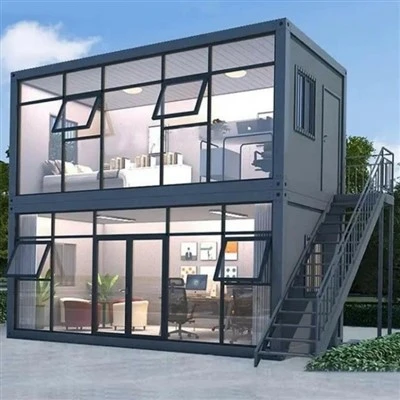
First off, let’s get this straight: expandable container houses aren’t throwaway units. When built right, they outlast most regular stick-built backyard sheds, and they can compete with small modular homes, too. But “how long” depends on a bunch of factors that most people don’t talk about. Let’s start with the basics: what’s an expandable container house made of, anyway? Unlike those cheap flip-up units you see on Amazon that crumple in a light breeze, ours (and most high-quality ones) start with standard shipping containers—14-gauge steel walls, the kind that ships 40-footers cross-country, holding up to 60,000 lbs of cargo for decades. We take that frame, add the expandable sections—usually aluminum support beams and heavy-duty fabric or vinyl panels, not flimsy plastic—and then insulate it with closed-cell spray foam, which is the same stuff they use in regular homes to keep heat in and water out.
So, with that core build, what’s the average lifespan? From what our in-house engineer crunches every quarter, plus feedback from customers who’ve had our units up for 10+ years, the baseline is 25 to 30 years when properly maintained. Wait, that’s not a guess—that’s based on the steel containers: the International Organization for Standardization (ISO) says shipping containers have a design life of 25 years when used for transport, but when they’re stationary (not bouncing around on a ship or train), they actually hold up way longer. We’ve got a customer in Maine who’s had one of our expandable units as a guesthouse for 12 years, and the only rust spots are on the undercarriage where snow plow salt splashed up—easy fix.
But here’s the thing: that baseline isn’t set in stone. Some units last 40 years, some start having issues after 15. The difference? How you treat them. Let’s talk about the big three factors that kill expandable houses faster than forgetting to winterize them.
First, environment. If you’re sticking your unit in a swampy, coastal area where salt air hangs thick every single day, that’s way harder on the steel than a dry, temperate state like Colorado. Salt air causes corrosion way faster than regular rain, so if you’re in Florida or Louisiana, you’ve gotta stay on top of touch-up paint every few years. On the flip side, if you’re in a place with brutal winters—think Minnesota or Canada’s prairies—extreme cold doesn’t actually hurt the steel, but it can mess with the expandable mechanisms if you don’t grease the hinges and keep the track clear of ice. We had a customer up in Calgary a couple years ago who forgot to clear snow from their unit’s tracks one winter, and when spring rolled around, the expandable section stuck a little. A $10 can of silicone lube and a quick wipe fixed it, no permanent damage. The worst? Extreme UV exposure in desert areas—like Arizona or the Australian outback. The vinyl panels on the expandable parts can fade over time if you don’t use UV-resistant coating, which we actually add as a free upgrade for anyone building in hot, sunny spots.
Second, maintenance. This is the part most people sleep on. Your expandable house isn’t a set-it-and-forget-it thing, but it’s way easier to maintain than a regular home. Let’s list the non-negotiables, the stuff we send in our free maintenance guide that 90% of our customers actually follow: every 6 months, check the expandable tracks for dirt or debris (a leaf or a pebble can jam the whole thing), wipe down the steel frames with a mild soap to remove dirt or salt, and inspect the sealant around windows and doors—if that cracks, water gets in, which is way worse than a little faded paint. We had a customer in Texas who skipped checking his sealant for 3 years, and a small leak ruined a corner of his carpet. Fixing that would’ve cost $50 at most if he’d checked it early, instead of $800 to replace carpet and drywall. Also, don’t use harsh chemicals to clean the steel—bleach or ammonia will eat away at the protective paint over time. Stick to soapy water and a soft brush, easy peasy.
Third, build quality. This is where most of the “my expandable house fell apart after 5 years” horror stories come from. A lot of cheap brands out there use 18-gauge steel instead of 14-gauge to cut costs, or aluminum beams that are too thin to support the expandable section, so after a few years, the frame bends. We’ve had customers come to us after buying a unit from a fly-by-night seller on Facebook Marketplace that started leaning after 2 years because the support beams were garbage. That’s why we always tell people: if a price seems too good to be true (like $10k for a 2-bed expandable), it probably is. We use ISO-approved steel containers, heavy-duty galvanized hinges, and the expandable mechanisms are tested to open and close 1,000 times without issue— that’s like opening and closing your unit twice a week for 10 years, no problem. We even offer a 10-year structural warranty, which is way more than most small home brands.
Wait, but what about the parts that aren’t metal? The insulation, the windows, the flooring? Those have their own lifespans, but they’re easy to replace. Closed-cell spray foam insulation lasts 80+ years in regular homes, so that’s not a problem. Windows? We use double-pane vinyl windows, which last 20 to 30 years—if one breaks, you can swap it out for $200, no need to replace the whole unit. Flooring? Most customers go with vinyl plank, which is waterproof and lasts 15 to 20 years, way longer than laminate. The expandable fabric panels? If you get the UV-resistant ones we recommend, they last 10 to 15 years—another $300 swap, super easy. None of that is a big, expensive overhaul, unlike a stick-built home where if your roof fails, you’re out $10k+.
I should also mention a common question: can you extend the lifespan? Hell yes. We have a few customers who’ve had their units for 15+ years and have upgraded parts to make them last even longer. One guy in Oregon replaced his regular vinyl panels with insulated metal ones a few years back, and now his unit is good for another 20 years. Another added a steel skirt around the base to keep rodents out and reduce rust—rodents love to chew on wiring, so that’s a cheap upgrade ($500) that saves you from bigger issues. The best part? If you ever decide you don’t want your expandable house anymore, you can almost always repurpose the steel container frame—scrap yards pay good money for steel, or you can turn it into a storage shed, a small workshop, even a tiny home for a family member. Nothing goes to waste, which is way better than a stick-built home that ends up in a landfill when you don’t need it.
Let’s get real, though—this isn’t for everyone. If you’re planning to move your house every other year (wait, can you even move an expandable house? Well, technically you can, but it’s way more work than a regular trailer home, and moving it will wear out the steel faster. Most people keep these in one spot, like a permanent residence or a vacation property), then maybe a modular home is a better fit. But if you want something that’s durable, flexible, and lasts as long as a small home, expandable containers are solid. I’ve seen them handle hurricanes (our customer in North Carolina boarded his unit up during Hurricane Ian, and it didn’t get a single dent), snow loads of 3 feet (the guy in Calgary I mentioned earlier had that much snow last year, no issues), and even minor earthquakes (our in a customer in Tennessee had a 4.8 a couple years back, and the unit didn’t shift an inch).
Wait, let’s address a quick myth I hear all the time: “expandable houses are only temporary.” Dude, my own expandable house is my full-time home— I live here with my dog, a cat, and my girlfriend, and we just celebrated our 5th year here. We’ve had a few tiny issues (once a window seal cracked in the third year, which we fixed under warranty, and a hinge got a little rusty—wiped it down with oil, done). I don’t plan on moving anytime soon, and I fully expect this place to be standing when our grandkids are around. That’s not temporary. That’s a home.
Now, if you’re in the market for an expandable container house, the biggest takeaway is this: lifespan is in your hands. You don’t have to be a handyman, just follow those basic maintenance steps, buy from a reputable brand that uses quality parts, and pick the right build for your climate. If you skimp on build quality or skip maintenance, you’ll have issues way earlier than 25 years. If you do it right, you’ll have a home that lasts generations.
If you’ve got questions about specific climates, or want to chat about what size unit works for your needs, hit me up. I’m always down to answer questions, no sales pitch pressure—just a guy who loves these things and wants to make sure people get a home that’s built to last. We can walk through the maintenance plan, show you our warranty details, or even send photos of units that have been up for 15+ years. No weird links, no hidden fees, just real talk.
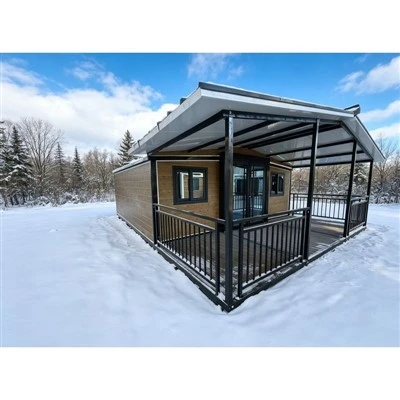
And before I wrap this up, here’s a quick note for anyone who’s still on the fence: don’t let the “expendable” part of the name throw you off. These aren’t trash. They’re expandable—meaning they grow with you, whether that’s adding a kid’s room, an office, or a guest space. Their lifespan is as long as you want it to be, as long as you treat them right.
Z-folding Container House References:
ISO 1496-1: Series 1 freight containers — Specification and testing — Part 1: General cargo containers for general purposes
U.S. Department of Energy, Building Technologies Office: Residential Insulation Material Lifespan Data
National Association of Home Builders: Modular Home Durability and Longevity Study
Steel Tank Institute: Corrosion Prevention for Structural Steel in Coastal Environments
Tangshan Jingrong Trading Co., Limited
With abundant experience, we are one of the most professional expandable container house manufacturers and suppliers in China. Please feel free to wholesale customized expandable container house made in China here from our factory. For price consultation, contact us.
Address: Room 1103, Tangshan Rongtong Building, Lubei District, Tangshan City, Hebei Province.
E-mail: Linda@tscontainerhouse.com
WebSite: https://www.tscontainerhouse.com/
