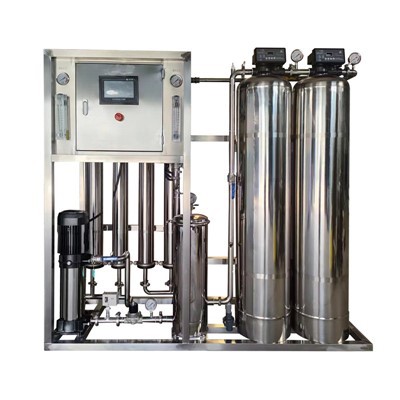
Seawater covers more than 70% of the Earth’s surface, yet its high salt content makes it unfit for most human uses, such as drinking and irrigation. As the world’s population grows and freshwater resources become increasingly scarce, the need for effective seawater purification methods has become more pressing. Among the various technologies available, ion exchange equipment has shown promise as a potential solution. As a supplier of ion exchange equipment, I am often asked whether this technology can be used for purifying seawater. In this blog post, I will explore the feasibility of using ion exchange equipment for seawater purification, its advantages, limitations, and considerations for implementation. Ion Exchange Equipment
The Basics of Ion Exchange
Before delving into the application of ion exchange in seawater purification, it is essential to understand the basic principles of ion exchange. Ion exchange is a reversible chemical reaction in which ions in a solution are exchanged for ions of a similar charge on a solid resin. The resin acts as a molecular sieve, selectively capturing and releasing ions based on their size, charge, and affinity for the resin.
There are two main types of ion exchange resins: cation exchange resins and anion exchange resins. Cation exchange resins exchange positively charged ions (cations), such as sodium (Na+), calcium (Ca2+), and magnesium (Mg2+), for hydrogen (H+) or sodium ions on the resin. Anion exchange resins, on the other hand, exchange negatively charged ions (anions), such as chloride (Cl-), sulfate (SO42-), and carbonate (CO32-), for hydroxide (OH-) ions on the resin.
Can Ion Exchange Equipment Purify Seawater?
The short answer is yes, ion exchange equipment can be used for purifying seawater. Seawater contains a variety of dissolved salts, including sodium chloride, magnesium chloride, calcium sulfate, and potassium chloride. Ion exchange resins can selectively remove these salts by exchanging the cations and anions in seawater for hydrogen and hydroxide ions, respectively. This process effectively reduces the salinity of seawater, making it suitable for various applications.
However, using ion exchange equipment for seawater purification is not without its challenges. Seawater has a high salt content, typically ranging from 3.5% to 4.0%, which means that a large amount of resin is required to remove the salts. Additionally, the resin can become saturated with salts over time, which requires frequent regeneration. Regeneration involves flushing the resin with a concentrated salt solution to remove the captured ions and restore its ion exchange capacity.
Another challenge is the presence of other contaminants in seawater, such as heavy metals, organic compounds, and microorganisms. These contaminants can also be captured by the ion exchange resin, which can reduce its effectiveness and lifespan. Therefore, it is essential to pre-treat seawater to remove these contaminants before passing it through the ion exchange equipment.
Advantages of Using Ion Exchange Equipment for Seawater Purification
Despite the challenges, there are several advantages to using ion exchange equipment for seawater purification. One of the main advantages is its high selectivity. Ion exchange resins can be designed to selectively remove specific ions from seawater, which means that they can produce high-quality purified water that meets the specific requirements of various applications.
Another advantage is its relatively low energy consumption compared to other seawater purification technologies, such as reverse osmosis. Reverse osmosis requires a high-pressure pump to force seawater through a semi-permeable membrane, which consumes a significant amount of energy. In contrast, ion exchange equipment operates at relatively low pressures, which reduces its energy consumption and operating costs.
Ion exchange equipment is also relatively easy to operate and maintain. It does not require complex equipment or highly skilled operators, which makes it suitable for use in remote areas or small-scale applications. Additionally, the resin can be easily replaced or regenerated, which extends its lifespan and reduces its operating costs.
Limitations of Using Ion Exchange Equipment for Seawater Purification
While ion exchange equipment has several advantages, it also has some limitations. One of the main limitations is its high cost. Ion exchange resins are relatively expensive, and a large amount of resin is required to purify seawater. Additionally, the regeneration process requires a large amount of salt and water, which can increase the operating costs.
Another limitation is its limited capacity. Ion exchange resins have a finite ion exchange capacity, which means that they can only remove a certain amount of salts from seawater before they need to be regenerated. This limits the amount of purified water that can be produced per unit of resin, which can be a significant drawback for large-scale applications.
Finally, ion exchange equipment is not suitable for removing all types of contaminants from seawater. While it can effectively remove dissolved salts, it may not be able to remove other contaminants, such as heavy metals, organic compounds, and microorganisms. Therefore, it is often necessary to combine ion exchange equipment with other purification technologies, such as reverse osmosis or activated carbon filtration, to produce high-quality purified water.
Considerations for Implementing Ion Exchange Equipment for Seawater Purification
If you are considering using ion exchange equipment for seawater purification, there are several factors that you need to consider. One of the first factors is the quality of the seawater. The salt content, pH, and temperature of the seawater can all affect the performance of the ion exchange equipment. Therefore, it is essential to conduct a detailed analysis of the seawater to determine its composition and characteristics before selecting the appropriate ion exchange resin and equipment.
Another factor to consider is the scale of the application. Ion exchange equipment can be used for both small-scale and large-scale applications, but the design and operation of the equipment will vary depending on the scale. For small-scale applications, such as household water purification or remote island water supply, a simple ion exchange system may be sufficient. For large-scale applications, such as industrial water treatment or desalination plants, a more complex and sophisticated ion exchange system may be required.
The cost of the ion exchange equipment and its operating costs are also important considerations. As mentioned earlier, ion exchange equipment can be relatively expensive, and the operating costs can also be significant. Therefore, it is essential to conduct a detailed cost analysis to determine the total cost of ownership of the ion exchange equipment, including the initial purchase cost, installation cost, operating cost, and maintenance cost.
Finally, it is important to consider the environmental impact of using ion exchange equipment for seawater purification. The regeneration process requires a large amount of salt and water, which can have a significant impact on the environment if not properly managed. Therefore, it is essential to implement appropriate environmental management measures, such as recycling the salt solution and minimizing the water consumption, to reduce the environmental impact of the ion exchange equipment.
Conclusion
In conclusion, ion exchange equipment can be used for purifying seawater, but it has both advantages and limitations. The high selectivity, relatively low energy consumption, and ease of operation and maintenance make it a promising technology for seawater purification. However, the high cost, limited capacity, and the need for pre-treatment and combination with other purification technologies are some of the challenges that need to be addressed.
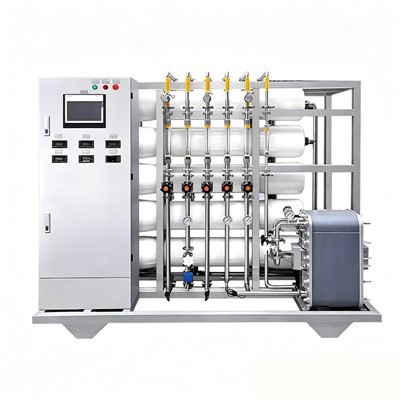
SWRO & BWRO Equipment If you are interested in using ion exchange equipment for seawater purification, I encourage you to contact us for more information. Our team of experts can help you select the appropriate ion exchange resin and equipment based on your specific requirements and provide you with technical support and training. We are committed to providing high-quality ion exchange equipment and solutions that meet the needs of our customers and contribute to the sustainable use of water resources.
References
- Helfferich, F. (1962). Ion exchange. McGraw-Hill.
- Sengupta, A. K., & Clifford, D. A. (1995). Principles and applications of ion exchange chromatography. Marcel Dekker.
- Verlinsky, Y., & Kuliev, A. (2004). Preimplantation diagnosis: The new frontier in preventive genetics. Kluwer Academic Publishers.
Shandong Yanuo Environmental Protection Equipment Co., Ltd.
We’re well-known as one of the leading ion exchange equipment manufacturers and suppliers in China, featured by quality products and good price. Please rest assured to buy bulk ion exchange equipment made in China here from our factory. Customized orders are welcome.
Address: North Side of the Road, 1,000 Meters West of the Intersection of Fenghuangshan West Road and Provincial Highway S102, Wangfu Subdistrict, Qingzhou City, Weifang City, Shandong Province.
E-mail: ynhb.499973983@gmail.com
WebSite: https://www.zkyaruo.com/
