If you’ve ever worked in progressive stamping, you’ve probably heard the buzz around servo presses, but if you’re a die maker like us, you might still be wondering how they’re actually different from the old mechanical presses we’ve relied on for decades. Let me break this down like I would to a fellow die designer over a coffee—no stuffy jargon, just real talk about what a servo press for progressive stamping is, why it matters, and how it’s changing the work we do every day. Progressive Stamping Die
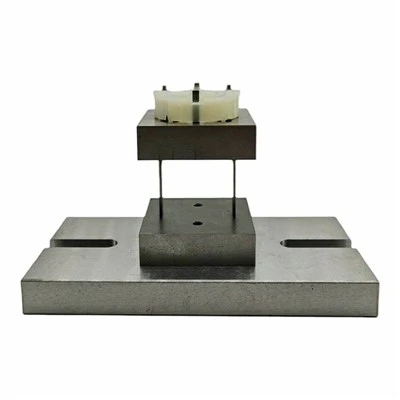
First, let’s ground this in what progressive stamping even is, for anyone new to the space. Progressive stamping is that process where a flat metal strip runs through a die, stopping at each station to get a little more shaped, punched, bent, or trimmed until you end up with a finished part—think car door hinges, electronics chassis, even small hardware like lock latches. For decades, all this work ran on mechanical presses. Those are the ones with a big flywheel and crankshaft; they move the ram (the part that presses down) in a fixed, rigid up-and-down motion, at a set speed, every stroke, no questions asked. That’s great for consistent production, but it’s inflexible. Mess with the stroke speed or position too much, and you’re asking for trouble—die damage, part defects, downtime you can’t afford.
That’s where a servo press steps in, and the key word here is control. Instead of that big crankshaft driven by an electric motor, a servo press uses a high-torque servomotor to move the ram. And here’s the game-changer: the servomotor isn’t locked into one motion. You can program its speed, position, and acceleration for every single part of the stroke. Want the ram to move slow when it’s first touching the metal to prevent springback? Cool. Want it to hold that pressure at the bottom for a split second to make a tight bend? Done. Want it to zoom back up fast so the strip moves through the die quicker? You got it. That kind of adjustability is stuff mechanical presses can’t do—we’ve tried, and it usually leads to worn out parts or a scrap bin full of bad parts.
Now, if you’re a progressive stamping die supplier like us, this isn’t just a “cool new machine” to brag about. It changes how we design dies. Let’s talk about that—because that’s where the real value hits for shops that do high-volume stamping. Take springback, for example. If you’ve ever stamped a metal part, you know metal hates staying bent the way you want it. It springs back a little, right? With a mechanical press, you have to overbend the part to account for that, and that adds extra stations to the die, more wear and tear, and more cost. With a servo press, you can adjust the hold time at the bottom of the stroke to push the metal into place, or slow the bend speed to let the material relax evenly. We designed a die last year for a automotive sensor bracket that used 3 stations instead of 5 just because we could fix springback with the press settings, not extra die work. That cut the shop’s tooling cost by almost 20%—no joke.
Another big win for die shops is reducing die damage. Mechanical presses hit hard, every time, at the same speed. If a strip shifts a little, or a burr comes loose and gets caught between the die and the ram, you’re looking at a bent punch or a broken die section—downtime that can run $1,000 an hour or more for high-volume shops. Servo presses let you have a “soft touch” at the start of the stroke. The ram moves slow until it’s just making contact with the strip, so if something’s off, you don’t just slam into it. We had a customer a few months back that stamped small copper terminals; they used to break 2-3 punches a week on their mechanical press. Switched to a servo press, and now they replace punches every 2-3 months. That’s less downtime, less money spent on tooling, way less stress.
Wait, but let’s not sugarcoat it—servo presses aren’t perfect, especially if you’re used to running high-volume, simple parts. Mechanical presses are cheaper upfront, and they can crank out parts faster for basic jobs. For a shop stamping 1 million identical washers a month, a mechanical press might still be the way to go. But if you’re running medium to high volume, complex parts, or you’re looking to cut tooling costs and scrap, servo presses are a game changer. And as die suppliers, we’re adapting fast— we design dies specifically to work with servo press motion, not just retrofitting old dies.
Let’s also clear up a common myth: some people call servo presses “electric presses” and think they’re too weak for big stamping jobs. No, modern servo presses have the same tonnage (that’s the pressing force) as mechanical presses—we’ve worked on dies for 50-ton servo presses that form thick steel brackets just fine. The difference is how they deliver that force, not how much of it they have.
Another thing that’s flown under the radar for a lot of shops is energy use. Mechanical presses waste a lot of energy spinning that big flywheel, even when they’re not pressing. Servo presses only use power when the ram is moving, so they cut energy costs by 30-50% on average, according to a lot of die shop data we’ve looked at. That adds up over a year, especially if you’re running presses 24/5.
Now, as a die supplier, we talk to shops every day that are on the fence about making the switch from mechanical to servo. The number one question we get is, “Will I have to completely redo all my dies?” The answer is: not always. A lot of older dies can work with servo presses, you just have to adjust the stroke settings. But if you’re designing a new die, building it specifically for a servo press will give you way more benefits. For example, you can design tighter clearances between punch and die because the servo’s soft touch means less side load on the tooling, which makes the die last longer. That’s a win for everyone.
We recently worked with a medical device shop that stamping tiny stainless steel parts for pacemakers. Their old mechanical press produced so much vibration that the parts would have tiny burrs you couldn’t see with the naked eye, but enough to fail inspection. Switching to a servo press let us slow the ram speed to almost a crawl during piercing, which eliminated those burrs completely. They went from a 5% scrap rate to less than 0.5%—that’s huge for a medical shop, where scrap means wasted material and missed deadlines.
Of course, there are things to watch out for. Servo presses require more maintenance than mechanical presses, mostly because the servomotor has more moving parts that need regular checks. But the trade-off in reduced tooling cost and downtime almost always makes up for it. And as die suppliers, we help our customers work through that—we not only build the dies, we give them tips on adjusting press settings, maintenance schedules, and even how to phase in the switch from mechanical to servo if they’re not ready to go all-in.
So, to wrap this up for anyone still learning: a servo press for progressive stamping is a press that uses a servomotor instead of a crankshaft, giving you full control over the ram’s motion. That control cuts die design time, reduces tooling and scrap costs, lowers downtime, and makes it possible to stamp way more complex parts than you could with a mechanical press. For die suppliers like us, it’s not just a new machine to work with—it’s a tool that lets us deliver better, cheaper, faster results to our customers.

If you’re a stamping shop looking to upgrade your press setup, or you’re a die designer working on a new project and want to see how a servo press can make your job easier, hit us up to talk through your needs. We’ve worked on everything from small electronic parts to heavy automotive components, and we can help you figure out if a servo press is the right fit for your operations.
Progressive Stamping Die References
- Society of Manufacturing Engineers (SME) Technical Brief: Servo Press Technology in Sheet Metal Stamping, 2022
- Progressive Stamping Die Manufacturers Association (PSDMA): Cost Comparison of Mechanical vs. Servo Presses for High-Volume Stamping, 2021
- Automotive Manufacturing Solutions: Springback Mitigation Methods for Progressive Stamping, 2020
- Journal of Manufacturing Processes: Energy Efficiency Analysis of Servo vs. Mechanical Presses in Stamping Operations, 2023
- Medical Device Stamping Association (MDSA): Tooling Life Improvements with Servo Press Technology, 2022
Dongguan Ruitong Precision Mold Co., Ltd.
With abundant experience, we are one of the most professional progressive stamping die manufacturers and suppliers in China. Please feel free to buy bulk customized progressive stamping die at low price from our factory. Welcome to contact us for quotation.
Address: No.17, Liuwuzhou South Road, Shijie Town, Dongguan City
E-mail: ming.dg@ruitongmould.cn
WebSite: https://www.ruitongmold.com/
