Hey everyone! If you’ve ever worked with power cords, extension leads, or heavy-duty electrical cables on construction sites, farms, or at home for big tools, chances are you’ve run into General Rubber Sheathed Flexible Cables (that’s GRSFC for short). As a supplier who’s been deep in this game for years, one question I get asked all the time is: what’s the actual temperature range these cables can handle? It’s not a random number we pull out of thin air, and getting this wrong can lead to some seriously bad issues—like cables melting, losing conductivity, or even creating fire risks. Let’s break this down like we’re chatting over a coffee, no stuffy engineering jargon (okay, maybe a tiny bit of practical stuff you’ll actually care about). General Rubber Sheathed Flexible Cable

First off, let’s clarify what a General Rubber Sheathed Flexible Cable even is, just to make sure we’re on the same page. Unlike those cheap plastic PVC cables you use for indoor lights, GRSFC is built to be tough. The outer sheath is made of natural rubber, EPDM rubber, or a mix of both—stuff that’s way more flexible than PVC, resistant to abrasion, oil, and rough treatment, and can take way more abuse from being dragged over concrete, chewed on by farm animals, or left out in the sun all summer. That toughness, though, comes with a specific sweet spot for temperatures, and that’s the big topic here.
So, what’s the actual temperature range for these cables? Let’s start with the basics: from what we test for here at the warehouse, most standard General Rubber Sheathed Flexible Cables we supply are rated for continuous use between -25°C (-13°F) up to +70°C (+158°F). Wait, but I know a lot of people think rubber is only for warm weather, right? Nope—we’ve got winter sites in places like Minnesota or Canada where temps drop to -30°C (-22°F), and the regular stock still works? Hold on—no, wait, let’s be clear. That -25°C is the minimum continuous operating temperature for the standard line. If you’re dealing with colder temps, some of our special low-temperature GRSFC can go down to -40°C (-40°F), but that’s not the default. For most general use—your regular construction sites, farm equipment, outdoor holiday light strings that need to flex when the air’s cool, or workshop tools— that -25 to +70 range is where you’re safe.
But here’s the thing: that range isn’t just made up. It’s tested using industry standards, and I’ve seen too many people push these limits and run into problems. Let’s talk about the cold end first. If you try using a standard GRSFC at -30°C (-22°F), that rubber sheath gets stiff—like, really stiff. Flex it there, and it’ll crack, split, or even tear apart. Last year, we had a guy come to us with a cable that he’d used on a winter road crew in northern Michigan; he’d dragged it through snow at -28°C, and the sheath split so bad the inner wires were exposed. He thought rubber was flexible no matter what, but that’s not how it works. The cold temps make the rubber lose its elasticity, so it can’t handle the bending and tugging that flexible cables need to do. That’s why the minimum is -25°C—below that, you need the low-temp spec.
Now the hot end—this is even more important. The maximum continuous temp is +70°C. Why? Because the rubber sheath starts to degrade above that. Let’s say you’re running a big electric saw, or a welding machine, on a cable that’s been in direct sunlight all day on a 35°C (95°F) day. Wait, 35 + the cable’s own heat from carrying power could push it over 70, right? Yeah, that’s a problem. When rubber gets too hot, it breaks down— first it gets sticky, then it gets brittle, and eventually it starts to crack or melt. That exposes the copper wires, which is a huge safety hazard. I once had a customer in a metal shop tell me he used his GRSFC for a 100A welding machine, and he kept running it on a 50°C+ summer day. After a month, the sheath was soft enough to pull off with his fingers. He was lucky he didn’t get a shock. Also, if you leave a GRSFC in direct sunlight for weeks, the UV rays will break down the rubber even if the air temp is lower—sun exposure can add extra heat, so even if the air’s 30°C, the cable’s surface might hit 70°C. That’s why we always warn people not to leave these cables out in direct sun for long periods, especially if they’re carrying high-power loads.
But wait, are there exceptions? Of course. Not all General Rubber Sheathed Flexible Cables are the same. We stock a couple of specialty lines that go beyond the standard range. For example, our heavy-duty industrial GRSFC used for steel mill equipment can handle short-term peaks up to +90°C, because it has a different rubber blend that’s more heat-resistant. And for guys working in arctic conditions, our winter-grade GRSFC can go all the way down to -40°C, no cracking, no stiffening—we tested it in a freezer at -45°C and bent it 180 degrees without a single split, which is way more than the standard line can handle. But these are not for general use—if you’re just plugging in a lawnmower or a workshop table saw at home, you don’t need that specialty stuff.
Another big question: what about short-term use vs continuous use? The range I mentioned is for continuous operation, meaning the cable is carrying power for hours on end. If you’re only using it for a few minutes—like, dragging it out to plug in a generator for a backup power cut—you can push the temp limits a little. For example, a standard cable might handle a short burst at +80°C, as long as it’s not carrying full power. But we never recommend that for regular use. The key here is that these cables are designed for flexibility, not for extreme heat or cold as a constant state.
Let’s also talk about why the temp range matters more for flexible cables than rigid ones. Flexible cables are made to bend, twist, and move around—think about an extension cord you yank around, or a cable attached to a portable generator that needs to be moved. The rubber sheath has to stay soft and elastic to do that. If it’s too cold, it can’t bend; if it’s too hot, it breaks down and loses that flexibility. Rigid PVC cables don’t have that same demand for constant movement, so their temp ranges are different, but GRSFC is all about that flex, so the temp range is non-negotiable for performance and safety.
I get it—this stuff can feel like overkill. But I’ve been doing this long enough to see what happens when people ignore the temp range. Cables that fail mid-job on a construction site, causing delays and extra costs. Cables that cause electrical fires when overheated, putting people at risk. Cables that split in the winter, leaving workers without power in dangerous conditions. All of that is avoidable if you just stick to the right temp range for your GRSFC.
So, how do you know if you’re in the right range? First, check the cable’s label. All good GRSFC has the temp rating printed right on the sheath—we make sure our products have that clear, so you don’t have to guess. If you’re working in temps below -25°C, grab the low-temp version. If you’re in a place where the cable will be exposed to constant high heat (like near a furnace or a heavy welding station), go for the heat-resistant heavy-duty line. And never, ever use a standard GRSFC at temps above +70°C for long periods.
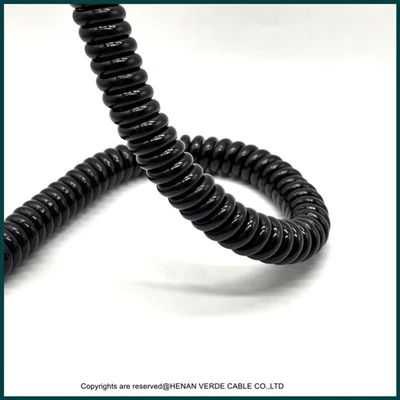
At the end of the day, General Rubber Sheathed Flexible Cables are built to be versatile, tough, and reliable, but they have their limits. The temp range isn’t just a number on a spec sheet—it’s what makes them work the way they’re supposed to, whether you’re using them on a farm, a construction site, or a home workshop. If you have questions about what kind of GRSFC is right for your specific temp conditions, or you need to order some for your next project, feel free to reach out. We’re here to help you pick the right cable, not just sell you the first one off the shelf. Don’t guess when it comes to electrical safety—let’s chat about your needs and get you the right solution.
FVN Wire References
International Electrotechnical Commission (IEC) 60245-2: Rubber insulated cables – Rated voltages up to and including 450/750 V – Part 2: Test methods
National Electrical Manufacturers Association (NEMA) WC 50: Flexible Cords and Cables
ASTM D1566: Standard Terminology Relating to Rubber
Henan Verde Cable Co., Ltd.
Henan Verde Cable Co., Ltd. is well-known as one of the leading general rubber sheathed flexible cable manufacturers and suppliers in China. Please feel free to wholesale high quality general rubber sheathed flexible cable in stock here from our factory. All products are with high quality and competitive price. Contact us for price list.
Address: Rm 1508, Kaixuanmen Building B#, No.238 Tongbai South Road, Zhengzhou City, Henan Province, China. 450006
E-mail: linda@welldecable.com
WebSite: https://www.welldecable.com/
