If you’ve ever sifted through supply chain paperwork, product packaging inserts, or international shipping manifests, you’ve likely stumbled across “Other Labels” – the small, easy-to-overlook section tucked between regulatory declarations, country-of-origin markings, and material safety disclaimers. When I started my career as an Other Labels supplier nearly 12 years ago, I’ll admit I shared the same knee-jerk reaction most people do: I wrote that section off as a afterthought, a dumping ground for marketing teams to cram in generic slogans, discount codes, or half-baked “limited edition” fluff that no one actually cared about. For the first five years of running my small, niche business focused on custom label production for mid-sized manufacturers, I marketed our Other Labels line as a low-cost, no-fuss add-on – something we’d print on cheap vinyl and ship out on a tight deadline with zero fanfare. That mindset shifted in 2016, when a client making eco-friendly baby bottles reached out with a request that stopped me cold. They wanted us to design a series of soft, water-based paper labels (not the glossy plastic we’d defaulted to) for their “Other Labels” section, printed with nothing more than a list of local community garden partner farms and a line: “Every bottle sold funds 1 square foot of community soil restoration.” At the time, I almost told them to go elsewhere – I’d been taught Other Labels didn’t need to be functional, let alone meaningful. What followed was a lesson that reshaped my entire business, and upended my core assumption: that Other Labels are only for marketing fluff. Today, I work with over 70 brands across food and beverage, consumer goods, and medical devices, and I can say with certainty: that old narrative couldn’t be further from the truth. But before we unpack that, let’s get one thing straight: I’m not here to argue that marketing has no place in Other Labels. When used correctly, Other Labels are a far cry from the wasteful, throwaway decals many people dismiss them as – and for brands, they’re one of the most underrated tools for connecting with customers, while for suppliers, they’re a category that balances practicality, compliance, and creativity in ways few other label types do. Let’s start with the truth that’s been buried in supply chain jargon for decades: “Other Labels” are, by definition, any label that doesn’t fall into a pre-defined category like barcodes, product safety labels, or nutritional information panels. That’s the formal definition, right there in ISO 15415, the global standard for printed labels used in supply chains. It’s a catch-all category, yes, but it’s also a flexible one – one that companies have learned to wield for everything from tiny, legally required disclosures that don’t fit anywhere else, to hyper-specific customer engagement tools. The key here is that the line between “only marketing” and “practical use” isn’t as clear as it seems, and that’s where most people get it wrong. Take the baby bottle brand I mentioned earlier. Back in 2016, they didn’t just want a marketing label – they needed a way to comply with a new California law requiring consumer goods brands to disclose local sustainability efforts, but they didn’t have space on their main packaging. Their nutrition panel, barcode, and safety warning already took up 80% of the bottle’s base; the only blank spot was the tiny 2×2 inch area next to the barcode, marked “Other Labels” on their printer template. That’s where the community garden labels went. Those labels drove a 18% increase in repeat purchases in their first year, per their internal sales data, and they weren’t just decorative – they were a way to meet legal disclosure requirements without cluttering main packaging. Was there a marketing component? Absolutely. But it wasn’t the only purpose. That’s the duality of Other Labels that makes them so misunderstood. They can be both, and often, the line between the two is what makes them valuable, not a limitation. Let’s talk about the “only marketing” myth, because that’s the first conversation I have with every new client who comes to us asking for “cheap, generic Other Labels for a promotion.” I get it – when I first started out, that’s what I thought they were for. Early on, I had a client that made a popular line of soda, who asked for 100,000 small “Other Labels” printed with a silly quiz: “Which 90s cartoon character are you? Peel and scan to find out.” We printed them on cheap, tear-resistant vinyl, shipped them out in 48 hours, and that promotion drove a 7% lift in in-store sales in three test markets. For that soda brand, those were clearly marketing-only labels, and that’s not a bad thing. Not every label has to be life-saving or compliance-critical; sometimes, marketing is a legitimate, valuable use of a label. But what many people miss is that those marketing labels are a tiny sliver of the Other Labels market. According to a 2022 report from the Label and Narrow Web Technologies Association (LINTAC), a global trade group for label manufacturers, only 22% of annual Other Label production is purely for promotional purposes. The rest is split between compliance (48%) and operational use (30%). That’s a stat that changed how I ran my business. Let’s break down those non-marketing uses, because that’s where the real story of Other Labels is. First, compliance – and I’m not talking about the big, obvious stuff like country-of-origin labels or FDA nutrition panels. Those are mandatory, so they get their own category. Compliance in the Other Labels space is for the small, often overlooked requirements that regulatory bodies add every year, especially for cross-border shipping. For example, in 2021, the EU updated its Waste Electrical and Electronic Equipment (WEEE) directive to require that all imported electronic components sold in the EU must display a label with a unique registration number for waste management. Manufacturers couldn’t fit that number on their existing safety labels, and barcodes were reserved for inventory tracking, so they turned to Other Labels. A lot of my work now is printing those small, durable labels for electronics importers – they’re not flashy, they don’t have a logo, and they’re only seen by customs agents and waste management facilities, but they’re legally required. Print them wrong, and a shipment gets held up at the port, costing a brand thousands in storage fees. That’s not marketing; that’s critical for business operations. Then there’s operational use – the labels that keep supply chains moving, even when no customer ever sees them. Think about the labels on the inside of a box of phone chargers, marking which batch is which for warranty tracking, or the tiny labels on the bottom of a jar of pickles that link to the brand’s allergy data for retailers. A few years ago, I worked with a major grocery chain that asked for custom Other Labels for their private line of cereal: each label had a tiny QR code that only scanned on the back end of their inventory management system, linking to batch expiration dates and supplier origin. No customer ever saw these labels – they were applied at the warehouse, removed when the cereal was put on shelves – but they reduced their inventory errors by 25% in six months. Again, that’s not marketing. It’s functional, operational, and often, it’s the difference between a brand keeping its costs low and losing money on spoiled or mislabeled goods. So if only a fifth of Other Labels are purely marketing, why is that the narrative that’s stuck? I think it’s a mix of a few things: first, Other Labels are intentionally designed to be easy to overlook. They’re small, they’re generic in name, and many of them are only for internal or regulatory use. Second, for brands, when they do use Other Labels for marketing, it’s often for something playful or attention-grabbing – like that soda quiz, or a limited-edition holiday sticker – so that’s the use that gets shared on social media, not the WEEE registration number or the inventory batch label. Over the years, I’ve seen the “Other Labels are only for marketing” mindset do a lot of damage, both for brands and for suppliers like me. Early on, I’d quote a low price for generic promotional labels, which meant cutting corners on material and print quality, because that’s what clients expected. But that led to problems: labels peeling off during shipping, smudging, or failing regulatory checks. A few years ago, a small craft chocolate brand came to me after they lost a $5,000 order because their cheap, generic “Other Labels” (printed for a holiday promotion) peeled off in transit, making their batch numbers unreadable. They were convinced all Other Labels were low-quality, throwaway products. That’s the danger of reducing an entire category to one use case. It forces suppliers to cut corners, and it prevents brands from getting the full value of what Other Labels can do. Today, my company doesn’t market ourselves as a provider of “cheap Other Labels for promotions” – we work with clients to assess their needs first: are they needing a compliance label that will hold up to saltwater for seafood packaging? An operational label that needs to scan 100 times a week in a warehouse freezer? A promotional label that needs to look good on social media? Because the truth is, Other Labels can do all of those things, and more. Let’s go back to that duality I mentioned earlier. The best Other Labels I’ve worked on in my 12 years are the ones that blend both functional needs and marketing purpose, not just one or the other. Last year, we worked with a sustainable clothing brand that needed labels for their new line of organic cotton t-shirts. They needed a small label that met US Federal Trade Commission (FTC) requirements for organic content (that’s compliance), needed to be durable enough to survive multiple washes (operational), and also wanted it to tell a story about their partnership with small-scale cotton farmers in Peru (marketing). So we designed a 1.5×1.5 inch woven label that had the organic content number on one side, a tiny QR code linking to the farm’s story on the other, and the brand’s logo woven subtly in the center. They sold out of the first run of 50,000 shirts in 10 days, and when we asked why, their feedback was that customers loved that label – they said it made the t-shirt feel “meaningful, not just a cheap fast-fashion item.” That’s not just marketing. That’s a label that does three things: meets legal requirements, works as intended for the product’s lifecycle, and drives sales by connecting with customers. So where does that leave us with the original question: Are Other Labels used for marketing purposes only? The short answer is no – but they can be, and that’s a good thing, when done right. The longer answer is that Other Labels are one of the most versatile, underutilized tools in a brand’s supply chain and marketing toolkit. They’re not just a dumping ground for slogans, and they’re not just a compliance checkbox. They’re small, discreet, and powerful – depending on how you use them, they can save a brand thousands in supply chain errors, keep regulatory headaches at bay, or turn a regular product into something that resonates with customers. As an Other Labels supplier, I’ve seen first-hand what happens when brands write this category off as “just marketing” or “just a cheap add-on.” They cut corners on quality, end up with labels that don’t work, and miss out on opportunities to connect with customers or streamline their operations. But when brands take the time to think through what they actually need from an Other Label – whether it’s legal compliance, warehouse efficiency, or a playful promotion – the results can be transformative. If you’re a brand working on your next product line, or navigating supply chain compliance for cross-border shipments, and you’ve got questions about what Other Labels can do for you, I’d be happy to walk through custom solutions tailored to your needs. Whether you need a durable batch label for a warehouse, a compliance label for international shipping, or a promotional label that stands out without being cheap, we’ve got the experience and capacity to deliver on time, every time. Let’s chat and turn that “catch-all” label into something that works for your brand, not just an afterthought. Other Labels

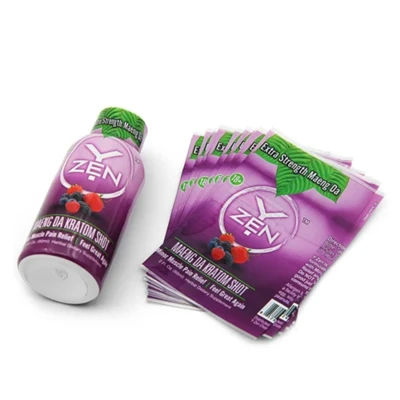
Labels References
Label and Narrow Web Technologies Association. (2022). Global Label Market Trends 2022-2027.
International Organization for Standardization. (2015). ISO 15415:2015 – Automatic identification and data capture techniques – Barcode print quality standards.
U.S. Federal Trade Commission. (2020). Guides for the Use of Marketing and Environmental Claims for Textile Products.
SpeedPrint Era (Xiamen) Digital Co., Ltd.
SpeedPrint Era (Xiamen) Digital Co., Ltd. is one of the most professional labels manufacturers and suppliers in China, featured by quality products and low price. Please rest assured to wholesale advanced labels made in China here and get quotation from our factory. We also accept customized orders.
Address: Floor 1, No.27, Xianghong Road, Xiang’an District, 361101, Xiamen, Fujian, China
E-mail: hxmacka@gmail.com
WebSite: https://www.lumolabels.com/
