If you’re an elevator tech, building manager, or someone who’s ever swapped out parts on a BLT elevator (you know, the ones that’re super reliable but still need regular TLC), you’ve probably stared at a new part in your hand and thought, “Great… now how do I make this not break mid-install?” That’s a question I get all the time, and it’s not just random—honest to god, a lot of folks reach out to our BLT elevator parts shop specifically asking, “Do these parts come with installation instructions?” Let’s break that down, no fluff, just real talk from someone who’s been in the parts game for almost a decade. Elevator Parts for BLT

First off, let’s get one thing straight: not all parts are created equal when it comes to docs. If you’re grabbing something tiny, like a BLT elevator door roller or a set screw for a guide rail, you might not get a full, step-by-step manual. Wait, hear me out—those parts’re standard. Most BLT elevator models (I’m talking the popular mid-rise residential and light commercial ones) use the same rollers and fasteners across their lineups. They’re standardized, so techs who work on BLT units know exactly how to pop those in. But if you’re ordering a bigger ticket item? Like a BLT elevator door operator panel, a drive module, or a safety edge sensor for a car door? Yeah, that’s where the instruction set comes in—and it’s not just a random sheet. It’s tailored to the exact part number you ordered, because those can vary even slightly between BLT’s 2018 and 2023 model runs.
Why does that matter? Let’s say you grab a drive module for a BLT 5000 series, which was made for elevator speeds up to 300 feet per minute. If you mix up the instructions for a BLT 3000 series (which tops out at 200 FPM), you’ll end up with a module that’s either underpowered or trying to run too fast. That’s not just a hassle—that’s a safety risk. I’ve seen techs skip checking the docs because they “know” the model, and half the time they spend an extra hour undoing a bad install instead of following the instructions right out the gate.
Now, let’s talk about what those instructions actually include, because it’s not just “screw this here.” For every core part we supply, the docs cover three key things: first, compatibility checks. That’s the part where it’ll tell you to cross-reference your old part’s serial number with the new one, or confirm the elevator’s load rating (like 2,500 lbs vs. 3,500 lbs) before installing. Second, safety steps—non-negotiable stuff, like locking out the elevator’s power before you even touch the part, or how to test the emergency stop after installation. Third, torque specs. Oh my god, the torque specs. A lot of door panels come with little bolts that you can’t just crank down hard—if you over-tighten, you’ll crack the plastic housing; if you under-tighten, it’ll rattle loose mid-run. The instructions spell that out, no guesswork.
Wait, but what if you’re a DIYer? Before you roll your eyes, yeah, some small building owners or handypersons who’re comfortable with electrical stuff take on minor BLT part swaps. Let’s be clear: you shouldn’t touch the drive module or main controller, but if you’re replacing a door safety sensor (the thin rubber strip along the door edge) or a signal light? We still send the instructions. It’s not because we don’t trust you—it’s because even a small misstep there can make the elevator stop working or, worse, not detect someone’s hand in the door. We’ve had a couple of folks try to skip those instructions and end up back ordering a second part because the first install failed. That’s a waste of their time and ours, so we make sure the docs are easy to follow, even if you’re not a 10-year veteran elevator tech.
But here’s the thing that most people don’t know: we don’t just send a static PDF. If you’re buying in bulk (like a building maintenance company that needs 10 door rollers for a whole apartment complex), we’ll also throw in a 5-minute video clip for the most popular parts. It’s not a Hollywood production—just a tech here at our shop (guys who’ve been wrenching on BLT elevators since the 90s) walking through the install. That’s way more helpful than a flat page of text, right? I’ve watched new techs who’ve only worked on a few elevators use those videos, and they’re finishing installs in half the time they used to.
Now, let’s address the exceptions, because there’s always a “but.” If you’re ordering a discontinued BLT part? Yeah, that’s when the instructions get a little tricky. BLT doesn’t keep docs for parts that’ve been out of production for 10+ years, so we don’t always have a formal manual. But here’s the silver lining: if you reach out to our team with your elevator’s serial number and the old part’s serial number, we can usually dig up a PDF from our archive or even connect you with a trusted elevator tech who’s worked on that exact model for years. We don’t just sell parts—we’re here to make sure they work, even the ones that’re no longer listed in BLT’s current catalog.
Wait, another question I get a lot: “Do the instructions come with every single part you sell?” Let’s be honest—if you order a pack of 10 small set screws for less than $5, we’re not gonna stuff a 3-page manual in the box. That’s overkill. Instead, we print a tiny note on the packaging that says, “Compatible with BLT X-series guide rails; standard 1/4” drive, torque to 15 ft-lbs.” That’s enough for anyone who’s worked with those parts before, and if you’re new, you can just shoot us a message and we’ll send over the full manual in 2 minutes. No hoops, no waiting.
Let me give you a real example to drive this home. A few months back, a small building manager in Chicago reached out because his BLT elevator’s door operator died. He ordered the exact part from us, and the package had the full instructions—step by step, with diagrams showing where to disconnect the old wiring and how to align the new panel. He said he’s not a tech, but he followed the instructions, called us when he hit a snag (one wire color was slightly different than the diagram, which we explained was a 2021 model quirk), and had the elevator back up and running in 2 hours. That’s the stuff we’re proud of—not just selling a part, but making sure someone can actually use it.
Another time, a senior elevator tech from a maintenance company out in Dallas reached out to complain that one of our instructions was missing a small note about the BLT 6000 series. We fixed it immediately, and now that note’s part of every manual for that series. That’s why we listen—because the people using the parts are the ones who know what works, and what doesn’t.
Now, let’s talk about what doesn’t come with the instructions, just to set expectations. We don’t send tools. Duh, that’s on you. We don’t send replacement wiring (unless it’s a specific part of a drive module, but that’s listed in the manual). And we don’t give free elevator certification—you still need to have a licensed tech do a full safety check after any install, which the instructions will remind you of. That’s not a loophole; it’s a safety rule, and we’re not gonna cut corners there.
So, to circle back to the original question: Do BLT elevator parts come with installation instructions? The short answer is: most of the time, for the parts that actually need ’em. The long answer is: it depends on the part, but we make sure you’ve got what you need to get it installed right, no guesswork.
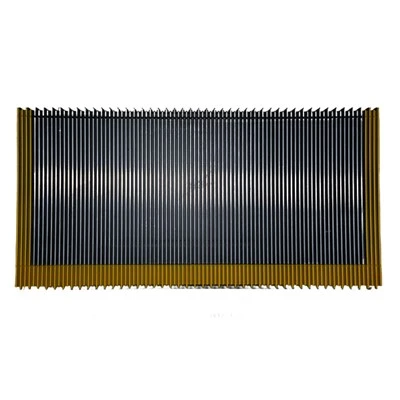
Now, if you’re shopping for BLT elevator parts—whether you’re a seasoned tech, a building manager, or someone who’s just tired of waiting for a broken elevator—don’t waste time hunting for parts that might not work. Reach out to our team, tell us your model number and the part you need, and we’ll hook you up with the right part, the right instructions (or the video, if you want it), and make sure you’ve got everything to get the elevator back up and running fast. We’re not just a parts supplier—we’re the folks who’ve got your back when something goes wrong with your BLT unit.
Other Brand Elevator Parts References
- Elevator World. (2022). Standard Installation Practices for OEM and Aftermarket Elevator Components.
- BLT Elevator Technical Support Archive. (2020). Instruction Manuals for BLT 3000, 5000, and 6000 Series Parts.
- National Elevator Industry Educational Program. (2021). Safety Guidelines for Non-Licensed Personnel Installing Minor Elevator Parts.
Shaanxi Nona Elevator Parts Co., Ltd.
As one of the leading elevator parts for blt manufacturers and suppliers in China, we warmly welcome you to wholesale bulk elevator parts for blt in stock here from our factory. All elevator parts are with high quality and competitive price. For pricelist, contact us now.
Address: No.1502 Ronghao Building, Xi’an City, Shaanxi Province, China
E-mail: candice@nonaelevator.com
WebSite: https://www.nonaelevatorparts.com/
