Is alloy steel expensive? That’s one of the first questions I get from new customers—small fabrication shops, aerospace startups, even construction project managers who’ve used carbon steel for decades and are weighing the upgrade. As a third-generation alloy steel supplier, I’ve fielded this question in every industry, from quiet in-person conversations at metal trade shows to urgent emails from engineers mid-big-ticket project. The short answer is: it depends. The long answer? That’s where the nuance lives, and that’s what I want to break down today, because “expensive” is a relative term—especially when you’re talking about a material that’s the backbone of nearly every critical structure and component built in the last 70 years. Alloy Steel
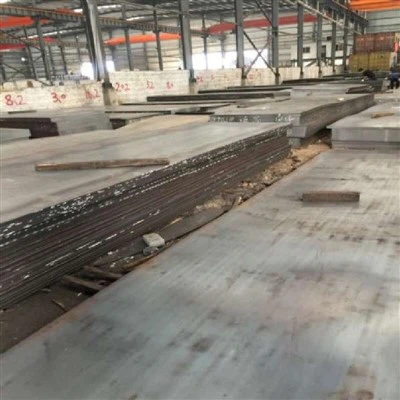
Let’s start with basics to ground this. Alloy steel isn’t a single material. It’s a family of steels mixed with alloying elements—think chromium, nickel, molybdenum, vanadium, even small amounts of aluminum—adjusted to tweak specific properties: strength, corrosion resistance, hardness, toughness, or high-temperature performance. Carbon steel, by contrast, only has carbon and small amounts of residual elements. So when someone compares alloy steel to, say, 1018 carbon steel, they’re comparing a one-note material to a custom-tuned one—and that customization usually comes with a cost, but not always in the way you might think.
First, let’s talk about upfront cost, because that’s what most people mean when they ask “is it expensive.” A quick check of our 2024 price sheet shows that a common low-alloy steel, like 4130 chromoly, runs about 15-20% more per pound than A36 carbon steel—used for bridges, heavy equipment frames, and hobbyist aircraft parts. A medium-alloy steel, like 4340 (for tooling or high-stress aerospace components), jumps to 30-40% more than A36. Then there are specialty alloys, like Invar (nickel-iron alloyed for dimensional stability in aerospace electronics) or maraging steels (for rocket motor casings), which can cost 10x or more than basic carbon steel. But here’s the catch: many of the customers who bristle at that 15% upfront premium don’t realize how much that small difference saves them down the line.
Let’s take a real example from last year. A small construction firm in Ohio came to us frustrated: they’d been using A572 carbon steel for bridge beams, and every few years, they were replacing beams that corroded faster than expected in the region’s high humidity and road salt. Their total cost over 10 years: $120,000 for materials and repairs. They switched to our ASTM A514 alloy steel, which has 70% more yield strength and better atmospheric corrosion resistance. Upfront, their material cost was 22% higher—about $146,400. But because A514 can carry 50% more load than A572, they needed 30% fewer beams, cutting total material to $102,480. No repairs or replacements needed over those 10 years, so their net cost was almost $20,000 lower. That’s where people get tripped up: they only calculate the material price per pound, not the total material needed, maintenance, and replacement costs.
Another angle: formability and machining. A lot of alloy steels are designed to be easier to work with than some high-performance carbon steels, which can be brittle and hard to machine without specialized tools. For example, our pre-hardened 4140 alloy steel has a consistent hardness of Rockwell C 28-32, so machinists don’t have to adjust their tools constantly, reducing scrap rate by up to 25% compared to normalized carbon steel. Scrap is a hidden cost—when a shop ruins a part mid-machining, they have to buy new material, labor, and time. That adds up fast, often erasing the upfront cost difference for alloy steel.
Now, when is alloy steel actually expensive, and when is it worth it? Let’s split this into use cases. If you’re making a garden rake or a storage shed frame, basic carbon steel is perfect—it’s cheap, easy to work with, and you don’t need it to hold up to extreme stress or corrosion. That’s not where alloy steel makes sense. But if you’re making a wind turbine gearbox, which has to withstand 20+ years of cyclic loading in salt air, or a medical device tool that needs to be sterile every day, or a race car engine component that sees 10,000 RPM and 2,000 degrees Fahrenheit, alloy steel isn’t a luxury—it’s a necessity. The cost of failure in those applications is way higher than the material cost. A wind turbine gear failure can cost a $1 million a day in downtime; spending an extra $5,000 on alloy steel that prevents that failure is a no-brainer.
I also get a lot of customers asking if they can get away with a lower-cost alloy to save money. That’s where I have to push back gently, because there’s a big difference between a cost-effective alloy and a false economy. For example, a customer once asked if they could use a low-alloy steel instead of 316 stainless steel alloy for food processing equipment, because 316 was 40% more expensive. The low-alloy steel would corrode in contact with tomato acid, leading to metal particles in the product, which would trigger a product recall costing tens of millions. That’s a false economy. The 40% premium was trivial compared to the risk.
Another factor that drives alloy steel prices: supply and demand for alloying elements. Chromium, nickel, molybdenum are all commodities, their prices swing based on global mining, geopolitics, and industrial demand. In 2022, for example, nickel prices spiked 250% because of supply concerns, pushing alloy steel prices up across the board. But that’s not a “permanent” high cost—by 2024, nickel prices stabilized, and alloy steel prices dropped back to pre-2022 levels. Carbon steel prices, by contrast, are more tied to iron ore and coal, which are more abundant and less volatile. So alloy steel can be more sensitive to market swings, but that doesn’t mean it’s “expensive” in absolute terms when those elements are in supply.
Wait, let’s talk about options that make alloy steel more affordable than you might think. Not all alloy steel is custom-made with rare elements. Our most popular alloy, 4130, is a low-alloy steel with just 1% chromium and 0.2% molybdenum—enough to make it stronger and tougher than carbon steel, but not so much that the price is outrageous. We stock 4130 plate, bar, and tube in standard sizes, so customers don’t have to pay for custom rolling or processing, which cuts costs significantly. For small orders, we also offer cut-to-length services, so you only buy the amount you need, no waste. That’s a big difference from specialty alloy mills that require minimum orders of 10,000 pounds, which is out of reach for small businesses.
I also work closely with customers to find the right alloy for their needs, not the most expensive one. Last year, a team of aerospace engineers came to me asking for a high-strength alloy for satellite structural components, and they initially quoted a premium maraging steel that would have cost $12 per pound. After reviewing their design, we found that 2205 duplex stainless steel, which is a common alloy for marine and aerospace applications, had enough strength and corrosion resistance for their needs, at $4.50 per pound. That saved them more than 60% on material costs, and the component performed exactly as required. That’s the value of working with a supplier who knows their stuff—not just pushing the most expensive product, but matching the right material to the application.
Let’s address a common misconception: “alloy steel is just a fancy version of steel for rich companies.” That couldn’t be further from the truth. I’ve supplied alloy steel to small farm equipment shops in Iowa, who use 4140 for plow blades that have to withstand rocky soil, and to craft breweries, who use 304 alloy steel for fermentation tanks that need to be resistant to yeast and acid. For both, the upfront cost is a bit higher, but the longevity and performance make it worth it. A farmer might not have the budget to replace plow blades every two years, so spending an extra 15% on blades that last 8 years is a better investment. A brewery can’t afford to have a fermentation tank corrode and ruin a batch of beer worth $50,000.
So, circling back to the original question: Is alloy steel expensive? The answer is no—if you’re using it for the right job. It is more expensive than basic carbon steel, but that premium is often offset by lower total costs, better performance, and reduced risk. It is not a cost-effective choice for non-critical applications, but for any project where strength, corrosion resistance, or durability matters, it’s often the most affordable choice in the long run.
At the end of the day, I’ve been in this business for 30 years, and the best conversations I have are when a customer comes in thinking alloy steel is out of their price range, and leaves with a solution that fits their budget and their needs. Whether you’re a small business looking for the right steel for your next project, a large engineering team working on a critical infrastructure build, or anyone in between, I’m here to help you find the right alloy steel, no matter your volume or budget. If you’re curious about how alloy steel could work for your application, let’s connect to discuss your project needs.
Spring Steel Sheet or Plate References
- ASM International. (2020). Alloy Steels: Properties and Selection. Materials Park, OH: ASM International.
- World Steel Association. (2023). Global Steel Market Report. Brussels: World Steel Association.
- Steel Market Update. (2024). Alloy Steel Price Trends and Forecasts. Cleveland, OH: Steel Market Update.
- NASA Engineering Network. (2022). Metallic Materials for Aerospace Applications. Washington, DC: National Aeronautics and Space Administration.
Jiangsu Cunrui Metal Products Co., Ltd.
As one of the most experienced alloy steel manufacturers in China, we also support customized service. Please rest assured to buy cheap alloy steel for sale here from our factory. If you have any enquiry about pricelist and free sample, please feel free to email us.
Address: 32-117,119, Nanfang Stalnless Steel Trading Conter, Wuxi,Jiangsu, China
E-mail: karen@cunruimetal.com
WebSite: https://www.cunruimetals.com/
