As a melamine door supplier, I get asked one question more than any other by contractors, homeowners, and interior designers alike: “What’s the weight of a melamine door?” It’s a practical, important question—one that impacts everything from door frame selection and hardware installation to shipping logistics and total project costs. But the answer isn’t a single number. Over the past 12 years in this industry, I’ve learned that melamine door weight is a product of specific variables, not a generic stat, and today I’m breaking down exactly what goes into calculating it. Melamine Door
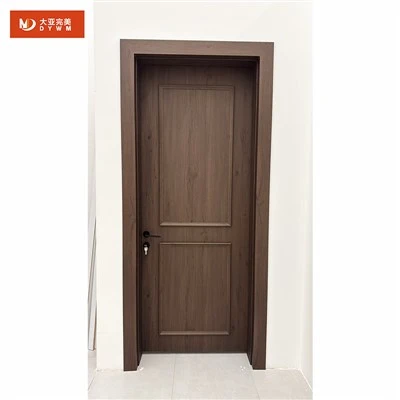
Let’s start with the basics, for anyone new to melamine doors. Melamine itself is a hard, durable plastic resin that’s fused to a core material under high heat and pressure. The “melamine door” refers to that finished, laminated door, not the core alone. The core is the biggest driver of weight, and that’s where most of the variation comes in. We don’t use just one core type at our company—we offer three primary options, each with a distinct weight profile.
First, the most budget-friendly and lightweight option: honeycomb core. This core is made of a thin, hexagonal paper or aluminum mesh that’s honeycomb-shaped, sandwiched between two thin cross-braces. It’s super rigid for its weight, which makes it ideal for interior doors in high-rise apartments where every pound counts to meet building load requirements. A standard 1-3/8 inch thick interior honeycomb core melamine door, sized at 80 inches tall by 36 inches wide, weighs roughly 18 to 22 pounds. That’s lighter than a gallon of milk, for context, which is around 8.6 pounds—so these doors are easy to maneuver for DIY installers too.
Next, our mid-grade core: particleboard core. Particleboard is a compressed wood byproduct, made from wood chips, sawdust, and resin, pressed into a solid slab. It’s denser than honeycomb, which makes for a more sound-dampening door, perfect for bedrooms and home offices. The same 80x36x1-3/8 inch particleboard core melamine door weighs between 28 and 35 pounds. The range here comes from the density of the particleboard: higher-density particleboard (used for commercial applications) hits closer to 35 pounds, while lower-density, residential-grade particleboard runs around 28.
Our heaviest option, and our most popular for high-traffic areas like entryways, family rooms, and commercial storefront interiors, is MDF (Medium Density Fiberboard) core. MDF is made of finely ground wood fibers, pressed under extremely high pressure to create a uniform, dense, solid slab. It has zero gaps or knots, so it’s also the easiest to trim or rout for hardware, which is why contractors love it. That same standard size MDF core melamine door weighs between 35 and 45 pounds. Again, density is the variable here—commercial-grade MDF for heavy use sits at the upper end of that range, while residential MDF is at the lower end.
Wait, I should mention: if you’re talking about exterior melamine doors? We don’t offer many, because melamine isn’t rated for constant outdoor exposure to moisture and UV rays, but if someone is custom-ordering one, it’s typically a thicker core—like solid core wood or even a marine-grade particleboard—and the weight jumps to 50+ pounds. But that’s a niche case, so most of our clients are shopping for interior doors, so we can stick to those numbers.
Now, why does this weight matter beyond just curiosity? Let’s get practical, from a supplier’s perspective, so you understand why we care as much as our customers do. First, hardware: a door that weighs 20 pounds needs a different hinge than a door that weighs 40 pounds. If you try to hang a 40-pound MDF door on a pair of 20-pound-rated hinges, those hinges will wear out in a year, leading to sagging doors and security issues. We always advise our clients to match hinge weight ratings to door weight, and we even provide a free hardware guide with every bulk order to take that guesswork out.
Then there’s shipping and installation. For residential projects, lighter doors (like honeycomb core) are a game-changer for DIY homeowners who don’t have a team of strong movers. A 20-pound door is easy to carry up a flight of stairs, whereas a 40-pound door might require two people, adding to labor costs. For commercial projects, bulk shipping weight adds up: if you order 100 doors, 18-pound honeycomb doors total 1,800 pounds, while 35-pound MDF doors total 3,500 pounds. That means higher freight costs, and sometimes limits what delivery truck can access a job site—narrow residential streets or low-clearance loading docks can’t handle large, heavy loads.
Wait, did I forget to mention door thickness? A lot of people don’t realize that standard interior doors come in two thicknesses: 1-3/8 inches for interior use, and 1-3/4 inches for exterior or heavy-duty commercial doors. If you’re looking at a 1-3/4 inch melamine door, add about 10 to 15 pounds to the weights I listed earlier. So a 1-3/4 inch MDF door is 45 to 55 pounds, which is standard for exterior entry doors when you do have a custom melamine-rated exterior finish.
I also get questions about how the melamine finish itself adds to weight. It’s so thin—usually only a fraction of a millimeter thick—that it barely registers. A single door’s melamine layer adds less than a pound, so it’s negligible compared to the core. That’s why we focus on core density as the main weight determinant, and we always specify core type clearly on our product listings to avoid confusion.
Another common myth: some people think all melamine doors are the same weight, no matter the supplier. That’s not true. At our company, we test every core batch before laminating to ensure we stay within our weight ranges, but some cut-rate suppliers will use lower-quality, higher-density particleboard to save on costs, leading to heavier doors that wear out faster. We had a client come to us last year who bought 50 cheap melamine doors from a big-box store; the MDF doors were 50 pounds each, and they started sagging within six months because the core was compressed too tightly, and the hinges were rated too low. We replaced all their doors with our standard-density MDF core, and they’ve had zero issues in two years. So weight isn’t just a number—it’s a sign of quality when it’s aligned with the right core density.
Now, what if you have a custom size? Maybe you need a 96-inch tall door for a high-ceiling room, or a 42-inch wide door for a wheelchairs-accessible opening. How do you calculate that weight? The math is straightforward: our standard door is 80×36 inches, so the surface area is 2,880 square inches. A 96×42 inch door is 4,032 square inches, which is about 1.4 times larger. So take the standard weight of your core, multiply by 1.4, and that’s roughly the custom weight. For example, a honeycomb core standard door is 20 pounds, so a 96×42 inch honeycomb door is around 28 pounds. We always confirm custom weights with customers before production, but that formula works for most standard custom sizes.
I should also note that there’s a tiny variation due to manufacturing tolerances. Every door is cut and laminated by hand, so you might see a 1 to 2 pound difference between two identical doors from the same batch. That’s totally normal—nothing to worry about, it’s just the nature of wood-based products.
As a supplier, we’ve built our reputation on being transparent about these details. We don’t hide weights, we don’t oversimplify, because we know that choosing the right door is about more than just color or price. The weight impacts functionality, longevity, and project budget. Last month, a general contractor called us because he was putting together a 200-unit apartment complex, and he was choosing between honeycomb and MDF doors. We walked him through the weight differences: honeycomb doors would save $1.20 per door in shipping, and they’re easier for the on-site crew to install, cutting labor time by 15 minutes per door. MDF doors would cost $0.80 less per door, but shipping costs would add $200 total, and installation would take longer. He went with honeycomb for 180 interior doors and MDF for 20 entry doors, and he saved over $3,000 on the project. That’s the kind of practical insight we bring to every conversation.
So to wrap up, let’s get a clear, easy-to-reference breakdown for anyone who’s still reading:
- Standard interior melamine door (80”x36”x1-3/8”):
- Honeycomb core: 18–22 lbs
- Particleboard core: 28–35 lbs
- MDF core: 35–45 lbs
- Heavy-duty exterior/commercial standard (80”x36”x1-3/4”):
- MDF core: 45–55 lbs
- Custom sizes: Calculate by multiplying standard weight by (custom surface area / 2880 sq in)
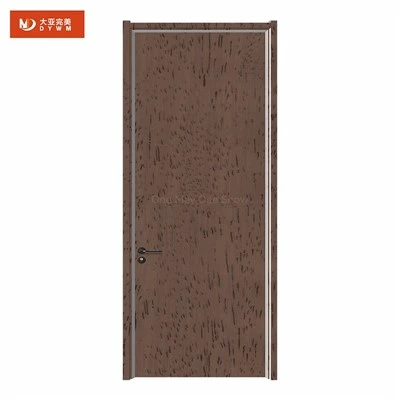
Interior Slab Door If you’re planning a project, whether it’s a small home reno or a large commercial build, don’t guess at door weight. We’ve helped hundreds of clients select the right door type based on their space, budget, and needs. We can provide exact weights for any size or core, share free hardware and installation guides, and even offer bulk pricing for large orders. Reach out to our team to discuss your project details, and we’ll help you pick the perfect melamine doors that check every box.
References
- National Wood Flooring Association. (2021). Door Core Materials: Weight, Durability, and Application Guide. NWFA Technical Bulletin.
- American National Standards Institute. (2019). Standard Practice for Interior Door Performance. ANSI/AHAM A161.1.
- Door and Hardware Institute. (2022). Weight Specifications for Residential and Commercial Interior Doors. DHI Industry Report.
- Melamine Manufacturers Association. (2020). Melamine Laminate Finishing for Wood Doors: Product Properties. MMA Technical Paper.
One May Dee Show Furniture Co., Ltd.
As one of the most professional melamine door manufacturers and suppliers in China, we are committed to providing high quality customized service with competitive price. Welcome to wholesale bulk cheap melamine door made in China here from our factory. If you have any enquiry about quotation, please feel free to email us.
Address: Laomiao Village, Dacheng Town, Sanyuan County, Xianyang City, Shaanxi Province, China.
E-mail: trade@omdoor.com
WebSite: https://www.dywmdoor.com/
