If you’ve ever walked past a factory floor where plastic or aluminum profiles are being extruded, cut, shaped, and finished into windows, door frames, or decorative trim, you’ve seen a profile machine at work. These systems are the unsung heroes of the construction, automotive, and consumer goods industries, turning raw materials into the parts that make daily life function. As a supplier who’s spent the last 18 years building and fine-tuning profile machines for manufacturers of all sizes, the question I get most often from new buyers isn’t about speed or durability—it’s about torque. Specifically: What’s the maximum torque of a motor in a profile machine, and why does it actually matter for their production? Profile Machine

I get it. If you’re a shop manager who’s used to measuring output in linear feet per hour or scrap rates per shift, motor torque might sound like a niche engineering detail. But I’ve seen first-hand how a torque mismatch can turn a $100,000 profile machine into a dead weight, costing a shop thousands in downtime every month. Let me break this down like I would for a customer standing in my office, no confusing jargon, just real-world context that matters for your bottom line.
First, let’s get clear on what a profile machine’s motor is actually doing. Profile machines aren’t single devices—they’re integrated lines, usually consisting of an extruder, a calibration unit, a cooling tank, a haul-off, a cutting saw, and a stacker. The motor’s role isn’t just to spin a part; it’s to move a continuous profile through every stage of the line without stretching, buckling, or breaking. Think of it like pulling a long piece of taffy through a series of rollers: pull too gently, and the profile lags behind, causing uneven thickness. Pull too hard, and you snap it. For the most common profiles—PVC window frames, aluminum trim, even food packaging profiles—the forces here come from two places: the resistance of the hot, soft material as it exits the extruder, and the tension required to keep the profile straight and steady as it moves through cooling and cutting.
That’s where maximum torque comes in. Maximum torque is the peak twisting force a motor can output in short bursts, right when it needs to overcome that initial resistance or adjust for small variations in material thickness, line speed, or load. It’s different from continuous torque, which is the steady force a motor can maintain for hours on end. A lot of buyers mix these two up, and that’s a mistake. If you size a motor based only on continuous torque, you’ll end up with a machine that can’t handle the unexpected spike in load when a profile’s thickness is off, or when material shrinks a little mid-production. That spike? That’s when you need maximum torque.
Now, to answer the question directly: For the profile machines we supply, the maximum torque of the main haul-off motor (the workhorse motor that moves the profile through the line) typically falls between 150 Nm and 800 Nm. Wait, that’s a huge range—why so big? Because it depends entirely on what material you’re working with, the size of the profile, and the line’s overall speed. Let’s break that range down with examples, because that’s how I explain it to customers.
If you’re running small, thin profiles—like PVC electrical conduit or thin aluminum trim that’s less than 2 inches wide—you’re going to need the lower end of that range, usually 150 Nm to 300 Nm. These profiles have low resistance, and line speeds often hit 100 feet per minute or more. A motor with too much maximum torque here would actually be inefficient, wasting energy and driving up your electricity bills. But if you’re running large, thick profiles—like 6-inch wide PVC window frames, heavy aluminum door frames, or thick profile boards for construction—you’re going to need the upper end, 500 Nm to 800 Nm. These profiles are denser, have more friction as they pass through calibration rollers, and often run at slower line speeds (20 to 50 feet per minute) but require more pulling force to avoid stretching the material.
I’ve had a customer who learned this the hard way five years ago. He bought a budget profile machine for his shop, sized the motor based on continuous torque, thinking “more speed = better,” and went to run his first batch of 6-inch PVC window frames. The machine’s motor only had 350 Nm of maximum torque. Halfway through the run, a small excess of plastic in the extruder die caused a 2-inch thick spot on the profile. The motor tried to pull the thin and thick sections at the same speed, and the thick spot pulled too hard against the motor’s peak force. The profile snapped. He lost three hours of production, had to clean the line, and ended up paying twice as much to upgrade the motor than he would have if he’d bought the right machine in the first place. That’s the kind of mistake I don’t want any customer to make.
Now, why can’t there be a one-size-fits-all maximum torque? Let’s talk about the science behind it, in plain terms. Maximum torque for profile machine motors is calculated using three key variables: material properties, cross-sectional area of the profile, and line tension.
First, material properties: Different materials have different melt viscosities. PVC, for example, is more viscous (thicker when melted) than polyethylene (PE), so it creates more resistance as it exits the extruder. Aluminum, when extruded, is much harder, so the haul-off motor has to exert more force to pull it through rollers, even at similar profile sizes. That means a motor for aluminum profiles will need a higher maximum torque than the same size motor for PVC.
Second, cross-sectional area: The bigger the profile, the more surface area it has in contact with the line’s rollers, and the more material it has to pull. A 2-inch round PVC pipe has a cross-sectional area of about 3 square inches, while a 6-inch window frame has a cross-sectional area of 12 square inches or more. That fourfold increase in area means four times more friction, so maximum torque has to scale accordingly.
Third, line tension: Tension is the amount of force required to keep the profile straight and aligned, especially during cooling. Hot material shrinks as it cools, and if the haul-off doesn’t pull with enough force to compensate, the profile will wrinkle or warp. For thick profiles, that tension can add 20% to 30% more load on the motor, requiring extra maximum torque to handle those spikes.
But wait—there’s a common myth out there that higher maximum torque always means a better machine. That’s not true either. A motor with 1000 Nm of maximum torque for a small thin profile will run at 20% efficiency, wasting energy and costing you hundreds of dollars a year in electricity. That’s why we size our motors for every profile machine we build based on the specific application the customer needs. For example, our entry-level profile line for small business runs has a 250 Nm maximum torque motor, perfect for small PVC profiles, and costs 20% less than our heavy-duty line for construction profiles, which has a 750 Nm maximum torque motor.
Another factor that affects maximum torque: the type of motor we use. For years, profile machines used DC motors, but today, almost all our machines use permanent magnet synchronous motors (PMSM) or variable frequency drive (VFD) induction motors. These newer motors have a much higher torque-to-weight ratio, meaning they can deliver more maximum torque in a smaller package, and they’re more efficient, too. A DC motor that used to deliver 500 Nm of maximum torque a decade ago is now matched by a PMSM that’s half the size, uses 15% less energy, and requires less maintenance. That’s a huge win for customers—more power, less cost, fewer breakdowns.
I also want to mention something that a lot of engineers don’t talk about: the actual test we do on every machine before it leaves our facility. When we build a profile machine, we test its maximum torque under load, using a dummy profile with varying thickness, to make sure it can handle 120% of the rated maximum torque without failing. Why 120%? Because in the real world, things aren’t perfect. Extruder dies wear down, material batches vary slightly, line speed adjustments happen on the fly. If the machine only can handle exactly the torque required, you’re going to have downtime. Adding that 20% buffer is what separates a machine that works for 10 hours a day and one that works 24 hours a day, five days a week.
Let’s circle back to that original question. The maximum torque of a motor in a profile machine isn’t a random number—it’s a calculated, application-specific detail that directly impacts your production speed, scrap rate, and downtime. For most small to medium profile shops, maximum torque will be between 150 Nm and 400 Nm, perfect for window frames, trim, and small piping. For large industrial shops running thick construction profiles or heavy aluminum parts, that number goes up to 500 Nm to 800 Nm. And the key is to match that number to what you’re actually making, not what someone tells you is “the standard.”
As a supplier, my job isn’t just to sell a machine—it’s to make sure it works for your specific needs. I’ve worked with shops that make 100 feet of thin PVC trim a day, and shops that make 10,000 feet of heavy aluminum door frames a day. Each of those needs a different maximum torque, and each of those needs a machine that’s built to handle their load, no exceptions.
If you’re in the market for a profile machine, don’t just ask about speed or price. Ask about maximum torque, what it’s rated for, and how it’s tested. Ask if the manufacturer uses motors that match your material and profile size. The last thing I want is for another customer to make that mistake my earlier one did—buying a machine that doesn’t have enough torque, spending thousands in downtime, and having to replace parts months later.
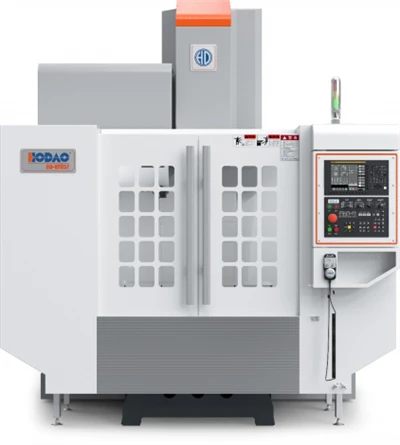
Every machine we build is tailored to the profiles our customers produce. We don’t do one-size-fits-all when it comes to motor torque, because we know that’s what makes or breaks a profile operation. Whether you’re a startup just getting started, or a large facility looking to upgrade your line, we can help you size the right motor with the right maximum torque to keep your production running smoothly, with minimal scrap and maximum uptime. If you’re ready to talk through your specific needs, just reach out—we’ll walk you through every detail, from torque specs to line speed to material compatibility, no sales pitch, just honest advice from people who build profile machines every day.
Engraving and Milling Machine References
- Plastics Engineering Handbook: Processing of Thermoplastics, Society of Plastics Engineers, 2019.
- Aluminum Extrusion Technology Handbook, Aluminum Association, 2021.
- Electric Motor Torque Fundamentals, National Electrical Manufacturers Association (NEMA), 2020.
Taizhou Qiyang Trading Co., Ltd.
As one of the most professional profile machine manufacturers and suppliers in China, we’re featured by quality products and good price. Please rest assured to buy bulk profile machine for sale here and get quotation from our factory. Customized orders are welcome.
Address: Zhenhai Village, Binhai Town, Wenling City, Taizhou City, Zhejiang Province
E-mail: qycncmachine@outlook.com
WebSite: https://www.qycncmachine.com/
