If you’ve ever worked with electrical components, devices, or systems that need to meet North American safety standards, chances are you’ve come across the term “Hipot test” — and if you’re a DC Hipot tester supplier, this isn’t just a technical phrase, it’s the core of what we help our customers get right every day. A lot of engineers and product designers hear “Hipot” and just think of a box you hook up to a part, press a button, and get a pass/fail result. But the story behind the test, especially as it relates to UL standards, is a lot more intentional, and the purpose is way too important to reduce to a simple checkmark. DC Hipot Tester

Let’s start with the basics: what a Hipot test even is. Short for “high potential test,” it’s an electrical safety test that applies a voltage much higher than a device’s normal operating voltage between two parts of an electrical system. The goal? To make sure there are no gaps, flaws, or weak points in insulation that could lead to electrical shock, arcing, or even fire. Now, when we talk about UL standards — specifically UL 60950 for information technology equipment, UL 60335 for appliances, UL 62368 for audio/video and communication equipment, and a handful of other product-specific UL standards — the Hipot test isn’t a random requirement; it’s a non-negotiable step to prove a product is safe for everyday use.
As a DC Hipot tester supplier, I work with teams every week who are navigating the UL certification process, and one question comes up more than any other: “Why DC specifically, instead of AC, for our Hipot test?” That’s where the purpose gets really specific. Let’s break down the two main types of Hipot tests: AC and DC. AC Hipot tests apply alternating current voltage, which is good for detecting gross insulation breakdowns, but it can also be too harsh for some components — especially modern electronics with sensitive circuits, thin insulation layers, or materials that might degrade over time with constant AC. DC Hipot tests, on the other hand, apply a steady, controlled direct current voltage. They detect two key issues that UL standards care about: insulation resistance breakdown and internal defects in a way that’s gentler on delicate parts, which is why UL often specifies DC Hipot for low-voltage electronics, consumer devices, and components that will be used in residential or commercial settings.
Wait, let’s clarify the exact wording in UL standards to make sure we’re not just talking in vague terms. UL 60335-1, the standard for household electrical appliances, specifies DC Hipot test voltages between 1,000V and 4,000V depending on the appliance’s rated voltage. For a 12V power adapter, that might mean a 1,500V DC test applied between the live circuit and the device’s metal chassis. For a 120V power tool, it could jump to 3,000V DC. The key here is that these voltages are not arbitrary: UL sets them high enough to simulate the worst-case scenario of insulation failure that could happen over the product’s lifespan, while still being low enough not to damage a properly manufactured unit. That’s the balance our DC Hipot testers are built to strike — we design them to deliver that precise, controlled voltage, and to accurately measure for two critical failure modes that UL looks for: dielectric breakdown and leakage current.
Dielectric breakdown is the big one. Insulation is a material designed to block electrical current, right? But if there’s a tiny pinhole in the insulation, or a thin spot where manufacturing missed a layer, or even moisture that’s seeped into the insulation over time, applying that high potential voltage will punch through that weak spot — that’s dielectric breakdown. When that happens, current flows where it shouldn’t, which is how you get a shock, a short circuit, or a fire. UL standards mandate the Hipot test specifically to catch these hidden flaws before a product hits the market. Without it, a manufacturer could ship a device with an insulation defect that might not show up during normal use, but would fail catastrophically after a month, a year, or even five years of use.
Leakage current is the other failure mode our DC Hipot testers monitor, and it’s just as important to UL’s requirements. Leakage current is the small amount of electrical current that accidentally flows through insulation that’s supposed to be an insulator. In a properly working device, that current is measured in microamps — like a few millionths of an amp, which is harmless. But if insulation is damaged, or if it’s the wrong material for the voltage level, leakage current can jump up to milliamps, which is enough to cause a serious electric shock, especially if someone touches the device’s exterior while it’s plugged in. DC Hipot tests measure this leakage current during the test, and UL sets strict limits on how much is allowed during that high-voltage application. A DC Hipot tester is ideal here because it can separate the resistive leakage current (from the insulation’s actual resistance) from the capacitive current (which happens when you apply voltage to two conductive plates separated by an insulator, like a capacitor) — a distinction that AC tests don’t make as clearly, making DC the go-to for UL-compliant testing.
Now, let’s talk about the role this plays in the bigger picture of UL standards. UL isn’t just a certification body that checks boxes; they set standards based on decades of accident data, consumer feedback, and engineering research. The Hipot test requirement comes directly from real-world incidents: devices that failed because insulation wore thin, or had a manufacturing defect that caused a shock. When a manufacturer designs a product to meet UL standards, the Hipot test isn’t just a one-time check for certification — it’s a tool to ensure that every unit coming off their production line is safe, not just the first prototype. As a DC Hipot tester supplier, we hear all the time about manufacturers who used to skip rigorous Hipot testing, only to have their product fail UL certification on the first try, or worse, have a batch of products get recalled because of a hidden insulation defect.
A common misconception I run into is that Hipot tests destroy the product. Yeah, if a unit fails the test, that means it already has a dangerous defect, so the test serves as a final quality check to pull bad units before they get to customers. But if a unit passes, that means its insulation is strong enough to handle the test voltage, which is a far higher voltage than it will ever see in normal use. For example, a laptop charger that runs on 19V will get a 1,500V DC Hipot test. That’s 79 times its normal operating voltage, which is a huge stress test, but a properly manufactured unit will pass without any issue — and that’s the point: to prove it can handle even abnormal conditions.
Let’s get specific with an example. Last year, we worked with a startup that was developing smart thermostats for residential use. They had a working prototype, but when they ran a basic insulation test, they found that some units had leakage current just over UL’s limit. Digging into it, they found that their insulation material supplier had changed their formulation without telling them, resulting in thinner insulation. Without the DC Hipot test required by UL 60730 (the standard for automatic electrical controls), they would have shipped hundreds of units that posed a shock risk to homeowners. The test caught the defect, they switched material suppliers, and they passed UL certification on their first attempt. That’s the purpose of the Hipot test in UL standards: it’s a safety net, not a hurdle.
Another key point: UL standards distinguish between type tests and production tests, and both require Hipot testing, but there’s a difference. Type tests are done on prototypes to verify that the design meets safety requirements, and Hipot is part of that to confirm the insulation system is appropriate. Production tests are done on every unit coming off the line, and DC Hipot is almost always the method specified here because it’s fast, repeatable, and doesn’t require destructive testing (unlike some other insulation tests). That’s why our DC Hipot testers are designed for both lab use (for type testing) and high-volume production lines (for 24/7 testing of thousands of units a day).
Now, let’s address why DC is preferred over AC for most UL Hipot applications, beyond the earlier points. AC voltage is alternating, so it has a peak voltage that’s higher than its root mean square (RMS) value — the 1,500V AC you might hear about is actually a peak of around 2,121V, which is harsher on insulation. DC voltage is a steady, non-alternating voltage, so the full 1,500V is applied consistently, without that peak voltage stress. For many modern electronics, which use small, thin insulation layers to keep devices compact, that steady DC voltage is better for detecting weak spots without overstressing good insulation. Also, DC Hipot tests can measure insulation resistance more accurately, which is a key metric UL uses to evaluate insulation health.
Wait, but what about higher-voltage systems, like EV chargers or industrial equipment? For those, UL might specify AC Hipot in some cases, but even then, DC is often used for lower-voltage components within those systems. That’s why as a DC Hipot tester supplier, we build models that cover a wide range of voltage outputs, from 500V for small sensors up to 10,000V for industrial equipment, to match whatever UL standard a customer is working with.
I’ve also heard some engineers say, “We test insulation resistance at normal voltage, so why do we need a Hipot test at high voltage?” That’s a great question, and it gets to the core of the test’s purpose. Insulation resistance testing at low voltage measures how much current flows through insulation under normal conditions, but it doesn’t tell you what happens when the insulation is under stress. A material might have good insulation resistance at 10V, but when you crank up the voltage to 1,500V, a tiny defect could cause the resistance to drop sharply, leading to breakdown. That’s exactly what the Hipot test is for: to simulate that stress and catch defects that low-voltage tests miss.
UL standards also require Hipot testing for different parts of a device, not just between the live circuit and the chassis. For example, between live and neutral lines, between a circuit and a user-accessible part, between separate circuits that are isolated from each other — each of these tests has its own voltage requirement based on UL’s rules, and our DC Hipot testers are built to handle all of these configurations, with adjustable test voltages, current limit settings, and pass/fail thresholds that can be programmed to match a customer’s specific UL standard.
Let’s talk about common mistakes I see customers make when setting up their DC Hipot testing for UL compliance. One big one is not accounting for capacitive current. When you connect a large component, like a transformer or a capacitor, to a Hipot tester, the act of applying voltage creates a capacitive current that flows temporarily, even if the insulation is perfect. If you don’t set the Hipot tester to wait for that capacitive current to decay before measuring leakage current, you might get a false failure, even on a good unit. All of our DC Hipot testers have a built-in timer delay, which is a UL requirement for many production tests, to account for that capacitive current and avoid false failures. Another mistake is not calibrating the tester regularly. UL requires that test equipment used for compliance testing is calibrated to meet accuracy standards, so our testers come with calibration certificates, and we offer regular calibration services to make sure they stay within UL’s requirements.
At the end of the day, the purpose of a Hipot test in UL standards comes down to one simple, non-negotiable goal: to prevent electrical injury and death. Electrical accidents are all too common — every year, thousands of people are injured, and hundreds die, from electrical shocks caused by faulty insulation in consumer devices, appliances, and industrial equipment. UL standards, and the Hipot test as a core part of those standards, exist to make sure that every product on the market is designed and manufactured with enough insulation to withstand normal use, wear and tear, and even abnormal conditions. As a DC Hipot tester supplier, our mission is to provide tools that make that test accurate, reliable, and easy to implement, so manufacturers can meet UL’s requirements, get their products to market safely, and keep consumers protected.
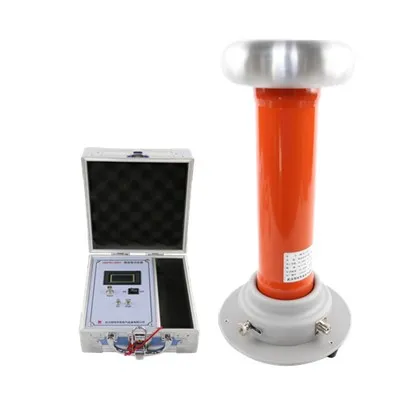
If you’re a product designer, quality engineer, or production manager navigating UL compliance for your electrical products, getting your Hipot testing right isn’t just about checking a box — it’s about protecting your customers, your brand, and your bottom line. If you need to learn more about how our DC Hipot testers can align with your specific UL standard requirements, or if you’re looking to upgrade your testing equipment for production or lab use, we’re here to help. Reach out to our team to discuss your needs, get technical guidance, or request a demo of our testers. We work with companies of all sizes, from startups to large manufacturers, to ensure their Hipot testing is both UL-compliant and tailored to their products.
Transformer Tan Delta Tester References
- Underwriters Laboratories. (2020). UL 60335-1: Standard for Household and Similar Electrical Appliances – Safety, Part 1: General Requirements.
- Underwriters Laboratories. (2022). UL 62368-1: Standard for Audio/Video, Information and Communication Technology Equipment – Safety, Part 1: General Requirements.
- Underwriters Laboratories. (2021). UL 60950-1: Standard for Information Technology Equipment – Safety, Part 1: General Requirements.
- IEC 60950-1: 2019, Information technology equipment – Safety – Part 1: General requirements (adopted by UL for North American standards).
- IEEE Standard for Electrical Safety in the Workplace, IEEE Std C2-2023.
Wuhan Goldhome Hipot Electrical Co., Ltd.
Wuhan Goldhome Hipot Electrical Co., Ltd. is one of the most professional dc hipot tester manufacturers and suppliers in China, featured by quality products and good price. Welcome to buy dc hipot tester in stock here and get pricelist from our factory. Contact us for customized service.
Address: A25 Huading Industrial Park, Wuhan Economic and Technological Development Zone, Hubei Province
E-mail: sales@goldhomehipot.com
WebSite: https://www.goldhomehipot.com/
