As a grey board supplier who’s spent over a decade sourcing and manufacturing the material that lines the back of most notebooks you pick up in stationery stores, I get a lot of confused questions from customers and even fellow stationery enthusiasts: “Wait, that thick cardboard behind the notebook pages is… grey board? What’s it even for?” For years, I’ve heard people write it off as a cheap, useless filler—something that manufacturers use to pad notebooks without thinking about function. But the truth is, grey board isn’t just a random byproduct of paper manufacturing. It’s the quiet workhorse that turns a stack of printed pages into a usable, durable tool that stands up to daily use. Let’s break down exactly what grey board does in notebooks, why it matters, and why it’s been a staple in the stationery industry for longer than you might realize. Grey Board
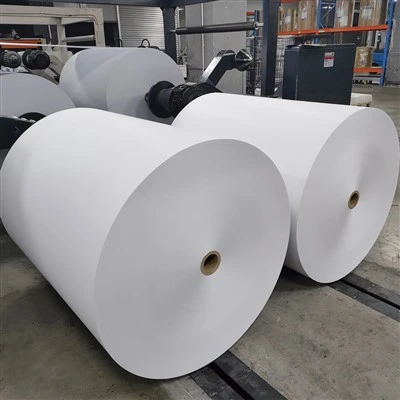
First, let’s start with the basics for anyone who might not know: grey board is a thick, rigid type of cardboard made from recycled paper pulp, often with a mottled grey or brownish-grey surface that’s not meant to be printed on or exposed. It’s way sturdier than the thin, flexible paper that makes up notebook pages, and it comes in different weights (measured in points, just like paper) depending on what it’s being used for. In notebooks, it’s almost always found as the back cover, and sometimes as a thin inner board lining the front cover too—sanded and covered with decorative paper or fabric to match the notebook’s design.
The first, most obvious purpose of grey board is structural rigidity. Think about the notebooks you’ve owned: the ones that stayed flat on your desk while you wrote, that didn’t bend in your backpack when you shoveled textbooks on top of them, that didn’t curl up at the corners after a month of use. That’s grey board at work. Without it, a notebook would be just a stack of loose pages, held together only by a thin paper cover and a staple or spiral binding. Try writing a paper with a notebook that has a flimsy, flexible back, and you’ll end up with uneven lines, pages that slip, and a notebook that looks beat up after a week. For students, professionals, and anyone who uses their notebook on the go, that rigidity isn’t a luxury—it’s a necessity. I’ve had multiple small stationery brands come to me complaining that their notebooks kept returning because customers thought they were “cheap” just because they used thin cardboard back covers, only to switch to standard 18-point grey board and see return rates drop by 60% within a month. It’s not about making the notebook expensive; it’s about making it functional.
But rigidity isn’t the only job grey board does. It also protects the notebook’s pages from damage. The front and back covers of a notebook act as a barrier between the inner pages and the outside world—water spills, scuffs from keys and phones, dust, even crumpling when you stuff a notebook into a bag. Grey board is far more resistant to these types of wear than thin paper or even coated cardstock. Let’s test that logic: if you drop a notebook with a paper cover in a puddle, the cover will soak through, the pages will warp, and the whole thing might fall apart. Drop a notebook with a grey board back cover, even the front decorative layer gets a little damp, the inner grey board stays dry, and the pages are safe. That same scuff from a set of keys? A thin cover will tear or leave a permanent mark, but a grey board is thick enough to absorb small impacts without damaging the inner pages. I’ve even seen notebooks that are 10 years old, with worn decorative covers but perfectly intact inner pages, all because the grey board did its job as a buffer.
Another often-overlooked function of grey board in notebooks is how it affects the writing experience itself. Wait, you might be thinking—how does the back cover affect writing? Let’s say you’re writing on the go, on a bus, or in a meeting where there’s no flat desk. You’ll tilt your notebook, or write with one hand holding it. If the back is flexible, the whole notebook will bend under the pressure of your pen, leading to smudged ink, uneven lines, and sometimes even the pen poking through the back of the page. Grey board eliminates that flex. It creates a solid, stable surface under the pages, so you can write firmly without worrying about the notebook giving way. For people who use fountain pens, gel pens, or markers—those with thicker tips that can push through thin paper—this is a huge difference. The grey board acts as a rigid base that supports the paper, so the pen doesn’t bleed through from pressure on the other side. I’ve had professional designers and architects tell me they won’t use a notebook without a grey board back cover, because the stability makes their drawings and notes so much cleaner. That’s not a small detail—it’s a functional choice that impacts how people actually use their notebooks.
Now, let’s address a common misconception: some people think grey board is a cheap alternative to other cover materials, but that’s not always the case. It’s true that some manufacturers use thin, low-quality grey board to cut costs, but when sourced properly, it’s a cost-effective, sustainable option that outperforms many more expensive materials. Wait, sustainable? That’s a big one these days. Most grey board is made from 100% recycled paper pulp—often from post-consumer waste like old cardboard boxes, newspaper, and unused paper from printing plants. Unlike synthetic cover materials, it’s recyclable too, which is a big selling point for eco-conscious consumers. A lot of people don’t realize that using grey board helps keep waste out of landfills, since it’s made from recycled materials, and it’s easy to recycle again once the notebook has reached the end of its life. I work with a number of brands that market their notebooks as “eco-friendly” specifically because they use recycled grey board, and it’s become a major selling point—customers are actively looking for that, because they want products that don’t add to plastic waste or other unnecessary materials.
There are also specific types of grey board for different notebook uses, which is a detail that most casual consumers don’t notice. For hardcover notebooks, we use a thicker grey board (usually 18 to 24 points) to create a solid spine that keeps the notebook from opening flat without effort, while for softcover notebooks, we use a thinner, more flexible grey board (10 to 14 points) so the notebook can bend easily when you stuff it into a bag. For spiral-bound notebooks, we sometimes use a slightly stiffer grey board on the back to keep the notebook from sliding around on a desk, even when the spiral is loose. For notebooks meant for travel, we use a water-resistant coated grey board on the outer layer to protect against spills and humidity. It’s not a one-size-fits-all material, which is why a good supplier like me will work with notebook manufacturers to source the right weight and finish for their specific product.
I’ve seen a lot of trends in the stationery industry over the years—from minimalist, thin notebooks to bulky, leather-bound journals—and through all of them, grey board has remained a constant. Why? Because it solves a problem that no other material can quite as well: it’s rigid, protective, supportive, and sustainable, all at a reasonable cost. It’s not flashy, it doesn’t have a pretty print, and you’ll never see it advertised as the “star” of the notebook—but that’s exactly why it’s so important. It’s the quiet workhorse that makes every notebook you use actually work.
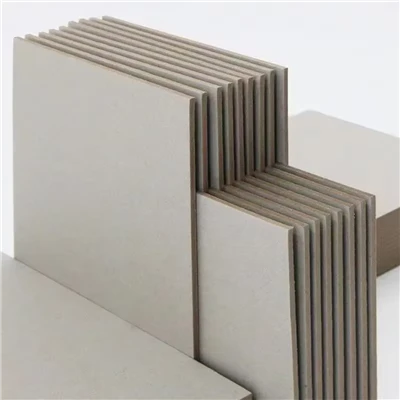
If you’re a notebook manufacturer, stationery brand, or anyone in need of high-quality grey board for your products, we offer custom sizes, weights, and finishes to match your exact specifications. Whether you’re making softcover notebooks for students, hardcover journals for professionals, or specialized notebooks for artists, we can supply the grey board that will make your product durable, functional, and appealing to customers. We work with brands of all sizes, from small indie stationery shops to large national retailers, and we’re committed to providing sustainable, high-performance grey board at competitive prices. Get in touch with us to discuss your project, ask questions about grey board specifications, or request a sample to test for your own products.
Tracing Paper References
- Paperboard Packaging Council. (2022). Paperboard Grades and Applications Guide.
- Stationery and Office Products Association International. (2021). Sustainable Materials in Stationery Manufacturing Report.
- Journal of Materials in Design. (2020). Rigidity and Wear Resistance of Paperboard for Consumer Packaging and Stationery.
- Greener Packaging Association. (2023). Recycled Paperboard: Environmental Impact and Circular Economy Benefits.
Dongguan Banyan Material Co., Ltd.
We are one of the most experienced grey board manufacturers and suppliers in China, also support customized service. Please feel free to wholesale bulk eco-friendly grey board from our factory. Quality products and reasonable price are available.
Address: NO.167, Meijing West Road, Songmushan, Dalang Town, Dongguan City, Guangdong Province, China
E-mail: Sales_chris@yspaper.com
WebSite: https://www.paperyoung.com/
