Hey everyone, if you’ve ever worked with fluid transfer systems—whether you’re a plumber, industrial technician, or equipment designer—you’ve probably heard of KC nipples. They’re those quick-connect fittings that make hooking up hoses, pipes, and machinery way less of a hassle than dealing with threaded joints every time. But here’s the thing that trips a lot of folks up: getting the length tolerance right for KC nipples. Mess that up, and you’re looking at leaks, misalignment, or even a fitting that won’t seat at all. As a KC nipple supplier, I talk to customers all the time who guess at the tolerances and end up with costly reworks. So let’s break this down straight—no jargon, just what actually matters for KC nipple length tolerance. KC Nipple

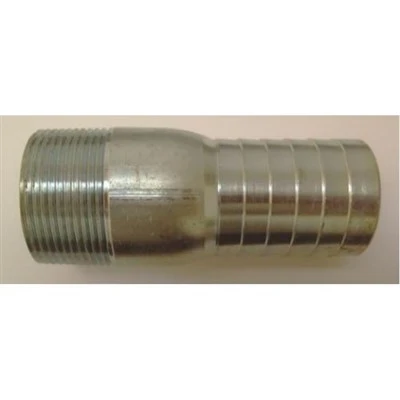
First, let’s get on the same page about what a KC nipple is, for anyone new here. Short for “King Combination,” these fittings are the go-to for heavy-duty applications: construction sites, agricultural irrigation, chemical processing, even emergency fire response. They’re made to handle high pressure and frequent disconnects, which is why their specs are non-negotiable. The “length” here isn’t just some random measurement to check off a list— it’s the distance from the end of the male thread to the face of the quick-connect coupler, right? Wait, no—actually, let’s be precise: there are two key length measurements people mix up. There’s the overall length (OAL) from one end of the nipple to the other, and the “effective engagement length” for the threads. That’s where tolerance comes in, because if either is off, the fitting won’t seal properly.
Now, what’s the actual tolerance standard for KC nipples? I’ve seen a lot of companies throw out generic tolerances, but the reality is, it depends on the size of the nipple and the material it’s made from. For our standard brass and steel KC nipples (the most common types used for general fluid transfer), the industry baseline from the NFPA (National Fire Protection Association) and SAE (Society of Automotive Engineers)—the two main bodies that set specs for these fittings—says length tolerance is usually ±0.03 inches (0.76 mm) for nominal sizes ½-inch up to 2-inch. Wait, for sizes bigger than that? Like 2½-inch to 4-inch? We bump it to ±0.05 inches (1.27 mm). That’s because larger fittings have more structural flexibility, so a tiny bit more variation won’t throw off the connection as much. But here’s the catch: that’s just the overall length. The thread section’s tolerance is way tighter—usually ±0.01 inches (0.25 mm) for thread pitch and length, because you need exactly enough thread to screw the nipple into a valve or pipe fitting without it bottoming out (which causes leaks) or sticking out too far (which makes connecting the coupler impossible).
I want to make this relatable, so let’s use a real example. Last quarter, a construction customer came to me with 1-inch KC nipples they’d ordered from another supplier. He said they wouldn’t fit his hydraulic hoses, and he was 20 pieces short for a job that had to get done in 48 hours. When we measured the nipples, the overall length was 0.1 inches too short—way outside the ±0.03 inch tolerance for 1-inch. The thread engagement was only 2 turns instead of the required 5, so the coupler wouldn’t lock properly, no matter how hard he pushed. We rushed him a set of our in-stock 1-inch KC nipples, which hit exactly the ±0.03 tolerance, and he got the job done on time. That’s the difference between knowing the right tolerance and guessing—our supplier missed that mark, and he almost lost a client because of it.
Why does this tolerance matter so much, beyond just fitting? Let’s talk about functionality and durability. If a KC nipple is too long, when you connect it to a coupler, it can create a gap between the seal ring in the coupler and the nipple’s face. That gap lets fluid seep out, which is a huge safety risk if you’re working with flammable materials (like fuel for heavy equipment) or toxic chemicals. On the flip side, if it’s too short, the thread engagement is too shallow. Frequent disconnects—like moving hoses around a construction site—will cause the threads to strip way faster than they should, leading to more replacements down the line. For industrial customers, that adds up to extra costs in parts and downtime, which is why getting the tolerance right isn’t just a “spec” it’s a big part of keeping operations running smoothly.
Now, let’s talk about exceptions, because not all KC nipples are the same. We make specialty KC nipples for things like cryogenic fluids or chemical-resistant applications, and those have tighter tolerances. For example, our stainless steel cryogenic KC nipples have a length tolerance of ±0.02 inches (0.5 mm) because cryogenic seals rely on a super tight, uniform connection to prevent air from getting in and freezing lines. Also, if you’re making custom KC nipples—say, a custom length for a specific piece of equipment—you have to work closely with your supplier to confirm tolerance. A lot of suppliers will cut corners on custom jobs, so make sure you ask for proof of tolerance measurements before you place a big order.
Wait, a common mistake I see customers make is confusing tolerance with quality. Just because a KC nipple is within the allowed tolerance doesn’t mean it’s a good fitting— but it does mean it will function as intended. A lot of cheap imports might hit the length spec but have loose threads or a poorly machined seal face, which causes leaks even if the length is right. As a supplier, we test every batch of KC nipples for length tolerance using digital calipers with a 0.001-inch accuracy, and we keep test records for all orders over 100 pieces. That’s something you should ask any supplier you’re working with: do they have tolerance test data, and will they share it with you?
Another thing to note: if you’re using KC nipples in a system that has multiple connected fittings, cumulative tolerance can be a problem. Let’s say you have three 1-inch KC nipples, each with a +0.03 inch length tolerance. When you connect them end to end, that’s a total of 0.09 inches of extra length, which can throw off the alignment of hoses and pipes. For systems that require precise alignment, like high-pressure hydraulic lines, you might need to specify a tighter tolerance, like ±0.015 inches, even if it costs a bit more. That’s a conversation you should have with your supplier upfront—don’t wait until you’re installing the system and realizing everything is misaligned.
Let me wrap this up with a few key takeaways, because I know this can feel like a lot. First, the standard length tolerance for most brass and steel KC nipples (½-inch to 4-inch) is ±0.03 inches for ½–2 inch sizes, ±0.05 inches for 2½–4 inch sizes. Specialty nipples (stainless steel, cryogenic, chemical-resistant) will have tighter tolerances, usually ±0.02 inches or less. Second, don’t just look at overall length—check the thread engagement length too, because that’s what prevents leaks and stripping. Third, always work with a supplier that can provide tolerance test data, and adjust tolerance specs based on your specific application (construction vs. cryogenic, for example).
If you’re sourcing KC nipples for your next project, and you want to make sure you’re getting the right tolerance, don’t hesitate to reach out. We can walk you through our specs, share test records for any batch, and even help you customize nipples if you need something outside the standard sizes. No hassle, no hard sell—just straight answers about what works for your job.
Safety Clamp References: NFPA 1901: Standard for Automotive Fire Apparatus; SAE J518: Fluid Power Systems and Components – Couplings, Flanges and Fittings; Industrial Hose and Fittings Association (IHFA) KC Nipple Specification Guidelines.
Suzhou Fuyikang Metal Industrial Co., Ltd.
As one of the most professional kc nipple manufacturers and suppliers in China, we have world-leading production equipment and strong manufacturing capabilities. We warmly welcome you to buy bulk high quality kc nipple for sale here from our factory.
Address: No.26.Mudong Rd,Mudu Town, Wuzhong Distric, Suzhou City,Jiangsu Province,China
E-mail: SZFYK@SZFUYIKANG-COUPLING.COM
WebSite: https://www.fyk-coupling.com/
